
Concrete Slab Contractor in Durham, NC
Custom concrete slab and pad installation for shed foundations, HVAC bases, metal buildings, and structural pours across the Triangle. Backed by over 20 years of experience and a full warranty on every pour.
Licensed & Insured
Warranty-Backed Work
Backed by 20+ Years of Experience
Custom Concrete Slabs and Pads for Every Structure
A slab is only as good as what it supports. A shed pad needs to handle a small building for 20 years or more. An HVAC pad needs to stay level and stable under equipment vibration. A metal building slab needs to carry the structure and everything stored inside it.
ADR Construction has poured concrete slabs and pads of every size and use across the Triangle for over 20 years. Small pads, structural slabs, equipment bases, and building foundations, we handle each with the base prep and reinforcement that decides how the slab holds up under real load.
For homeowners, builders, and contractors across Durham, Raleigh, Cary, Chapel Hill, and Apex, we install concrete slabs sized around what will go on top. Every project starts with a real site visit and ends with a warranty-backed pour.
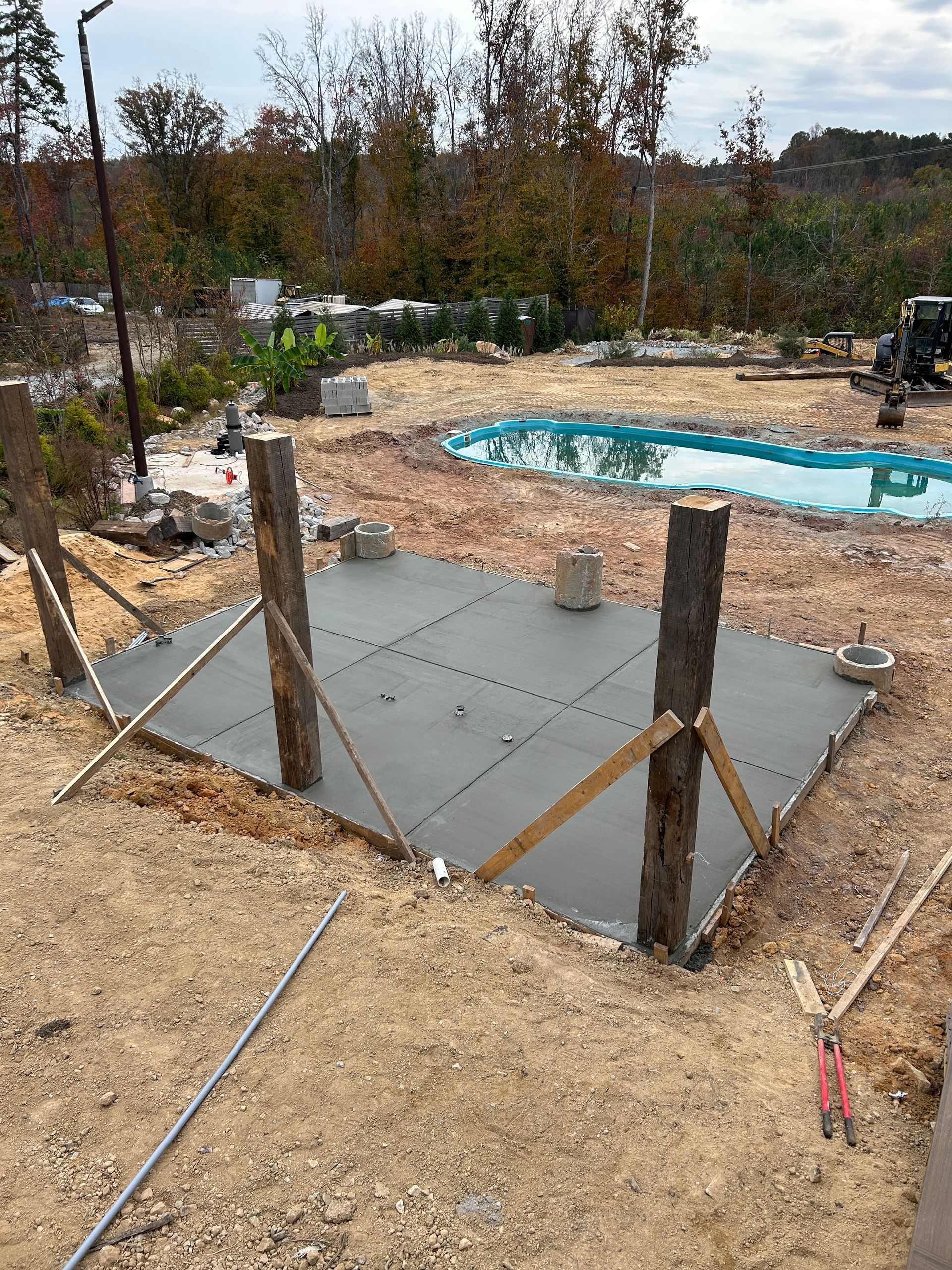
Common Concrete Slab Uses
Slabs and pads support everything from small equipment to full structures. Here are the projects we pour most often for homeowners and builders across Durham and the Triangle.
Shed & Storage Building Pads
The concrete pad your shed will sit on for the next 20 years. We size the slab to your shed dimensions and pour with the right thickness, slope, and reinforcement.
HVAC Unit & Equipment Pads
Level, stable pads for HVAC condensers, mini-split units, and outdoor equipment. Coordinated with your HVAC contractor so the pad is cured when the unit arrives.
Metal Building & Pole Barn Slabs
Structural slabs for metal buildings, pole barns, and small commercial structures. Poured with the anchor bolts and reinforcement your building spec sheet requires.
Generator & Utility Pads
Small structural pads for standby generators, utility boxes, and outdoor equipment. Sized and reinforced to handle vibration and load over years of use.
Basketball Hoop & Sport Court Pads
Concrete pads for basketball hoops, half courts, and smaller sport surfaces. A stable, level base gives you a true bounce and holds up to daily play.
Our Concrete Slab Installation Process
Every concrete slab project follows a clear, organized process. You always know what stage the project is in and what comes next.
Step 1
Site Visit & Load Assessment
We visit the site, take measurements, and talk through what will sit on the slab. Structure specs, load weight, and delivery timing all shape the pour requirements.
Step 2
Detailed Estimate & Approval
We provide a written estimate covering scope, dimensions, thickness, reinforcement, anchors, and timeline. Once approved, we schedule the pour around your project schedule.
Step 3
Site Prep & Base Work
We clear the site, remove existing surfaces if needed, then grade, compact, and prep a stable base. Base work at this stage decides whether the slab holds up under real load.
Step 4
Concrete Placement & Finishing
We pour, level, set any anchor bolts or embedded hardware, and finish the slab to spec. Timing on the pour and finish decides how the surface holds up under weight.
Step 5
Curing & Final Walkthrough
After curing, we review the slab with you, share curing timelines for foot traffic and full loading, and confirm the pour meets the spec before we consider it done.
Concrete Slab Installation Planned Around Your Build
Slab timing matters more than most concrete work. When a shed arrives before the pad is ready, an HVAC install is delayed, or a metal building crew hits an unset slab, the whole build slips.
We plan every pour around your builder, contractor, or delivery date. That means asking about the structure going on top, the crew installing it, and the curing time we need before that happens.
For homeowners and builders across Durham, Raleigh, Cary, Chapel Hill, and Apex, we schedule every slab around the projects it supports. Every pour comes with a full warranty and the timing that keeps the rest of your build on track.
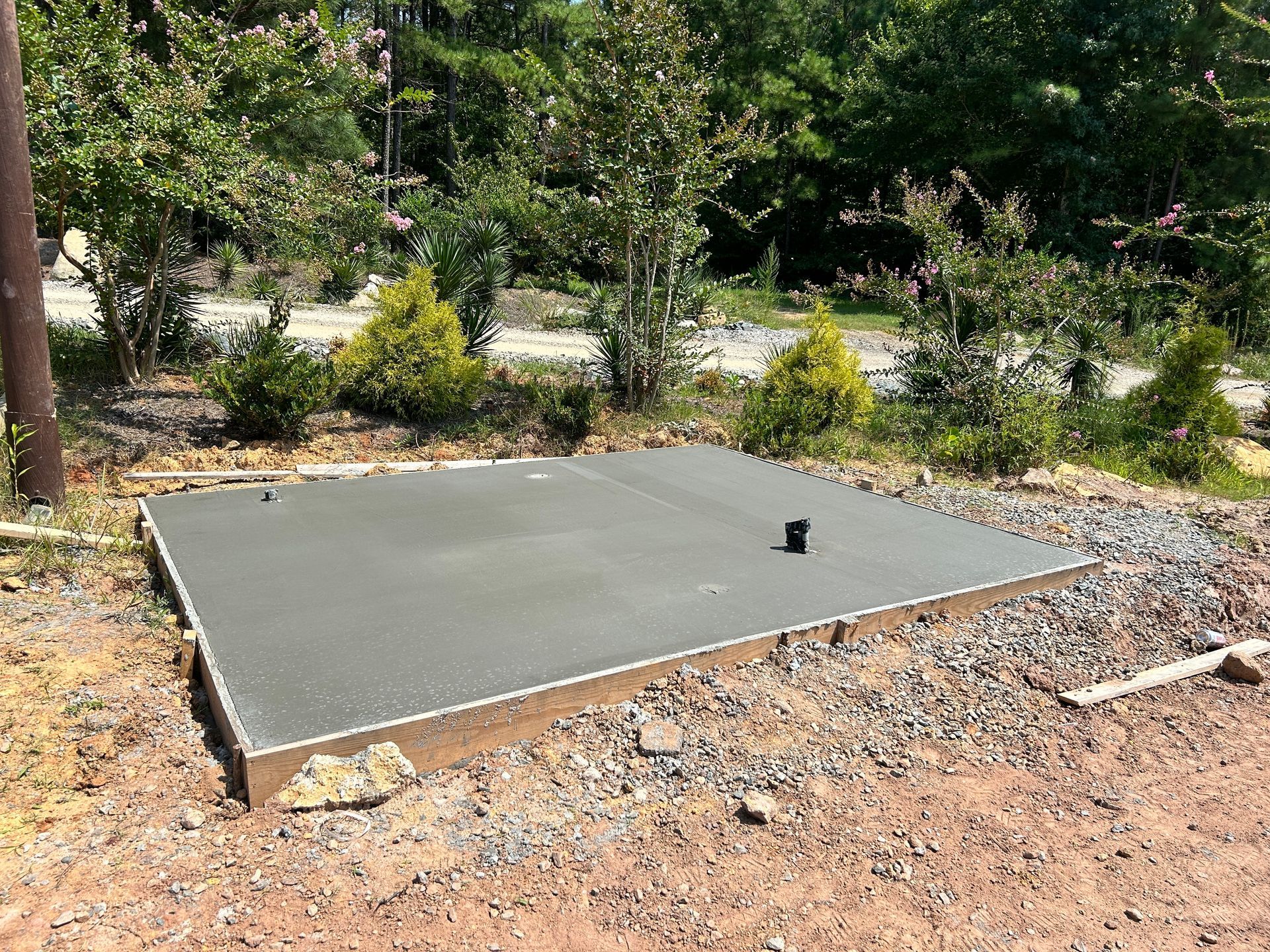
EXPLORE OUR RECENT PROJECTS
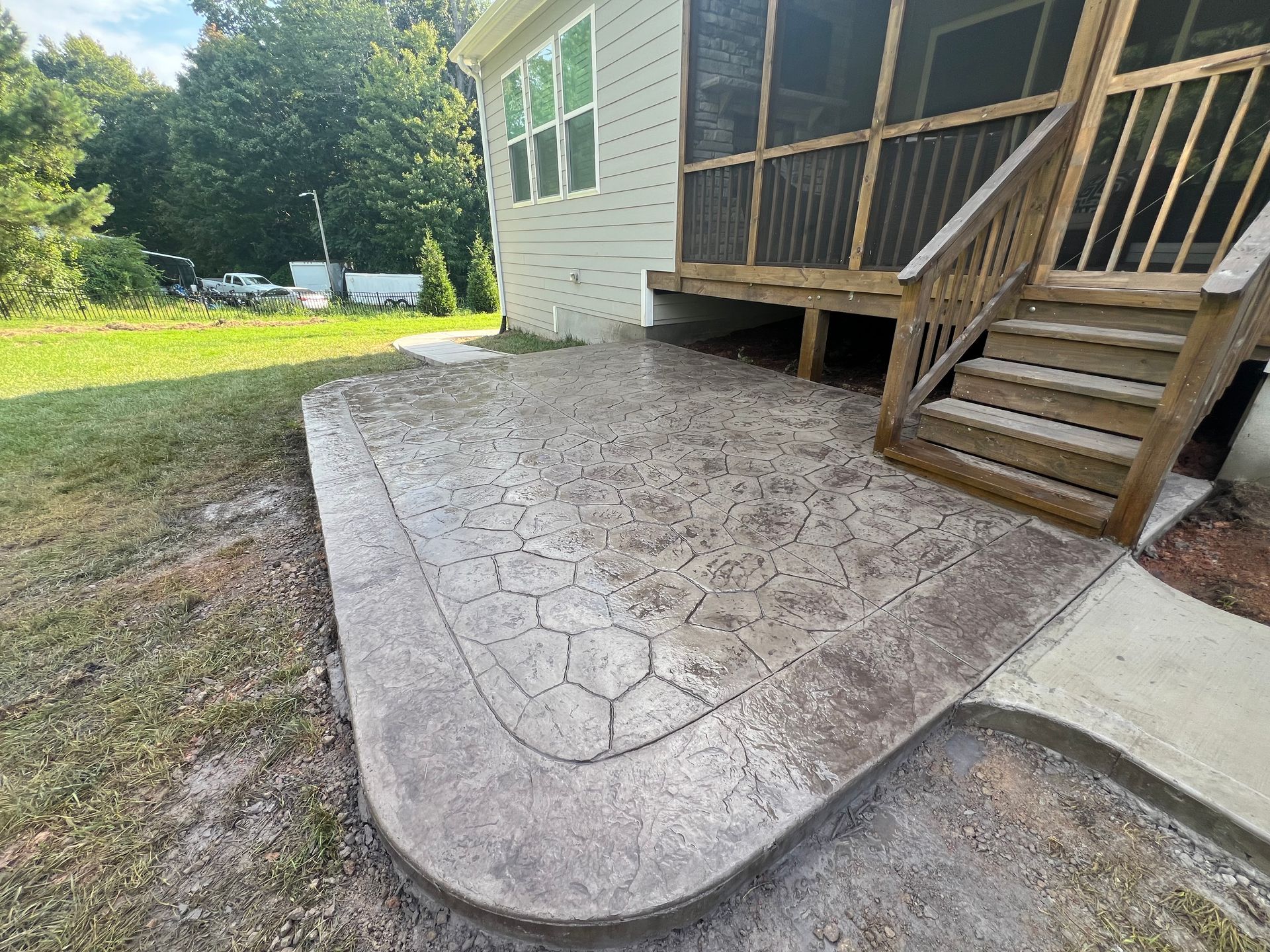
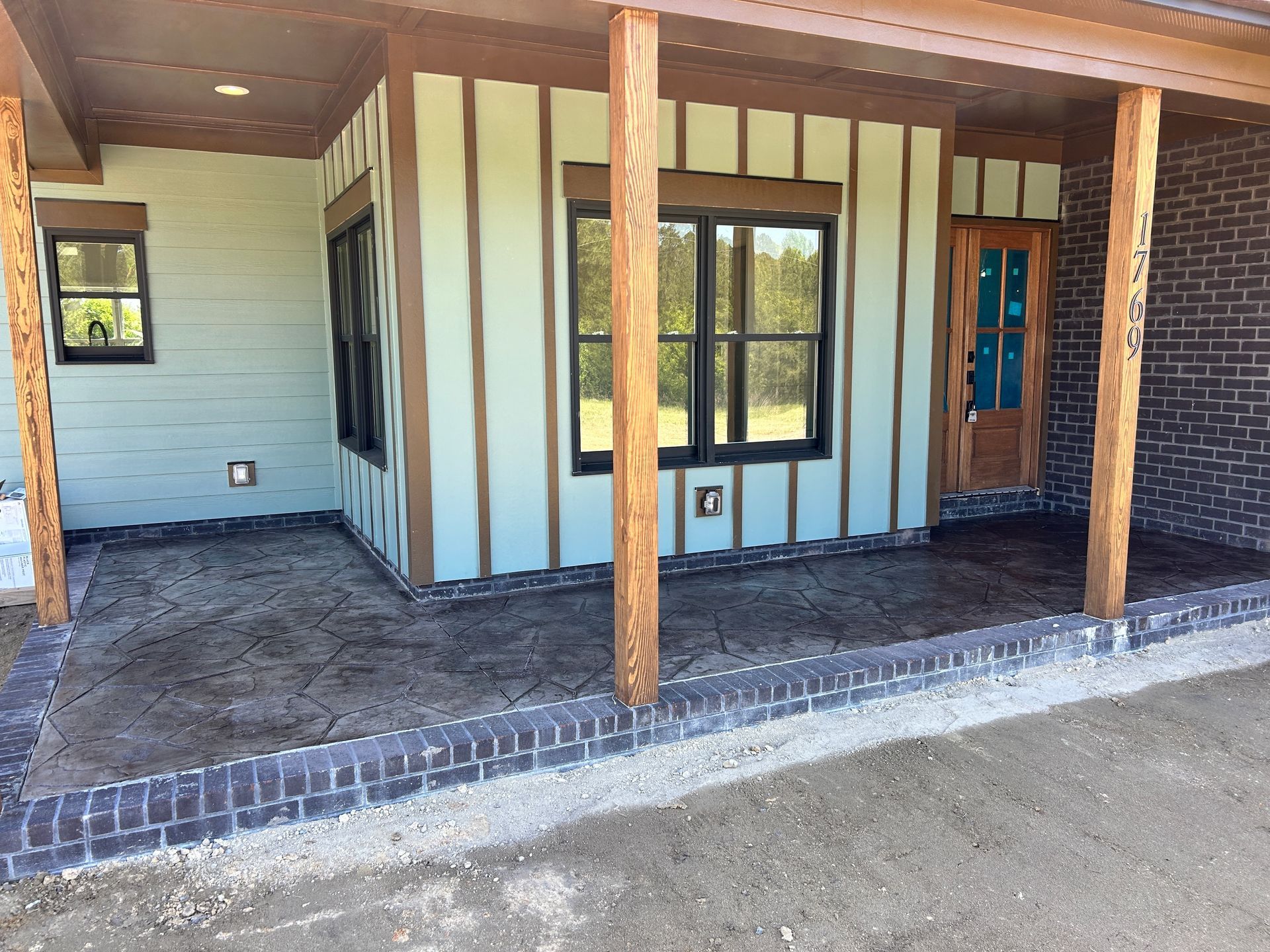
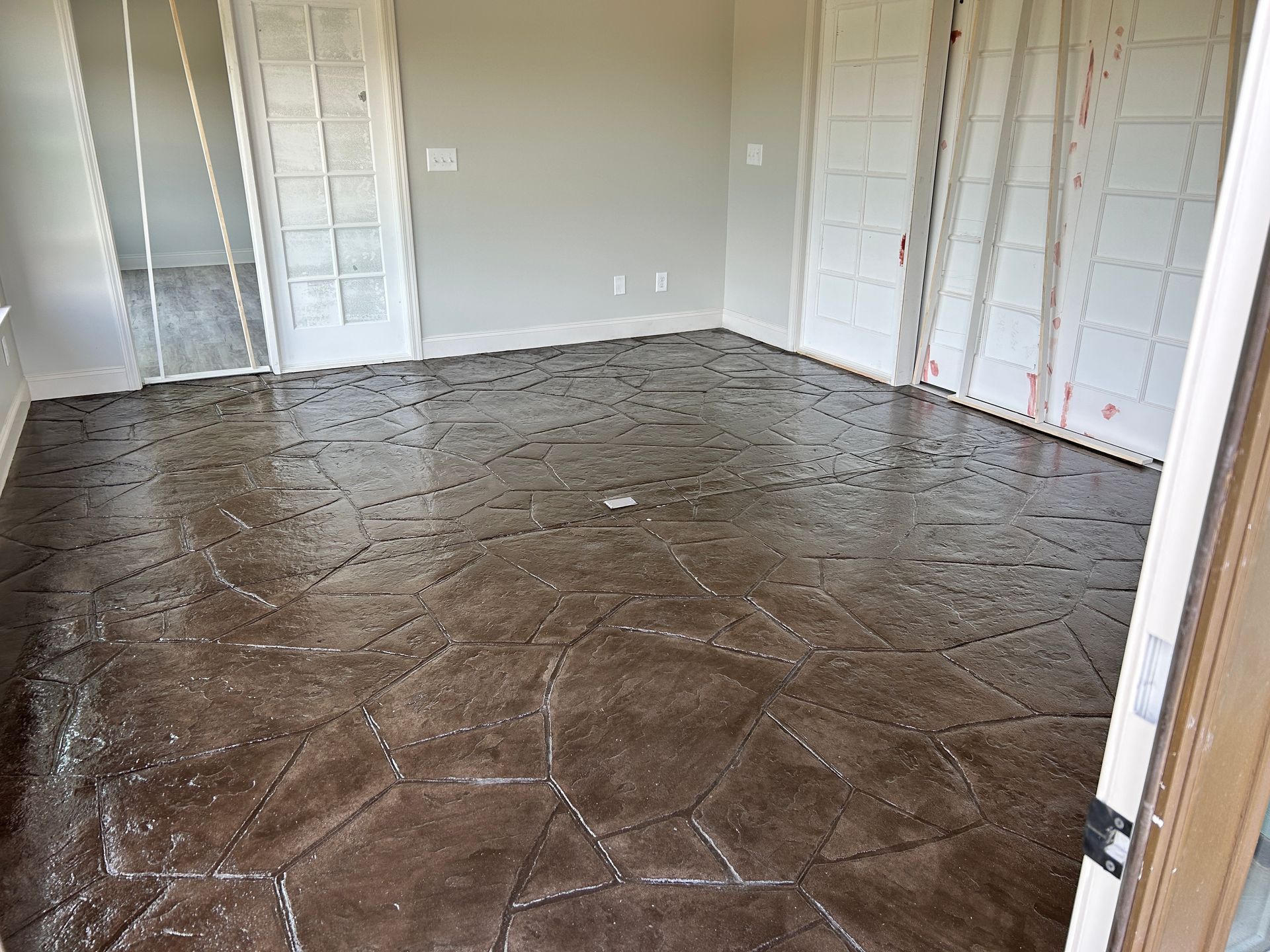
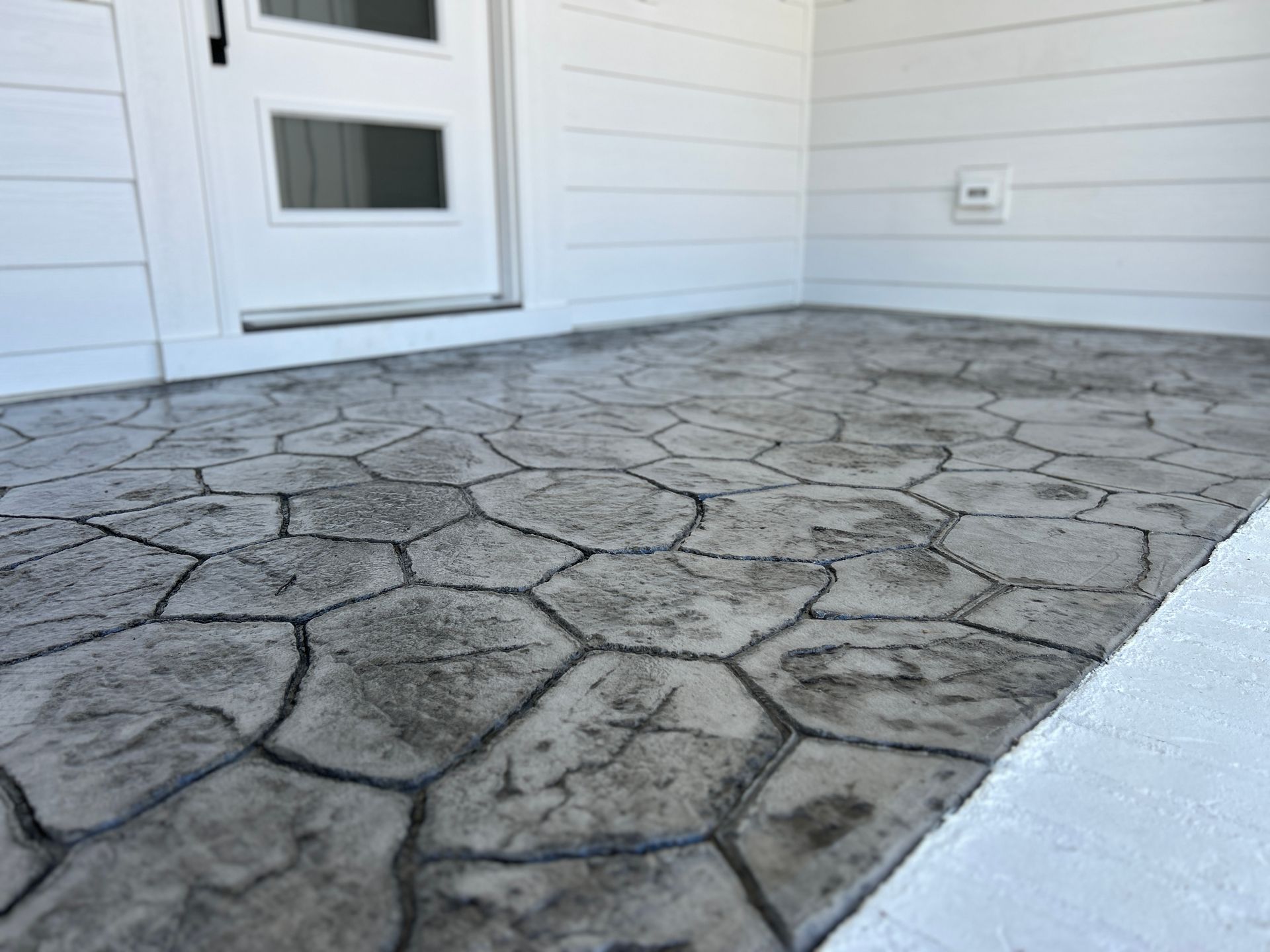
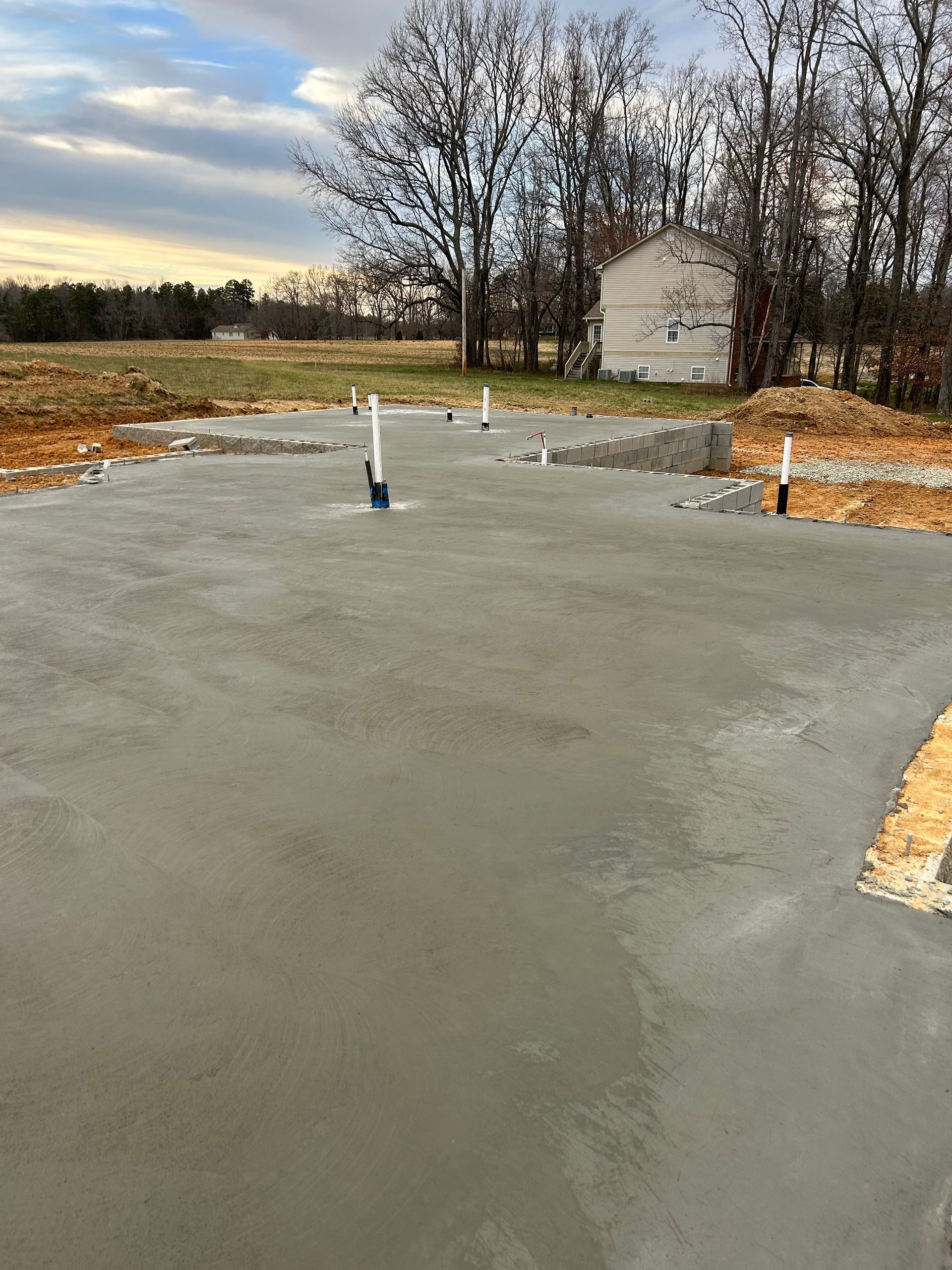
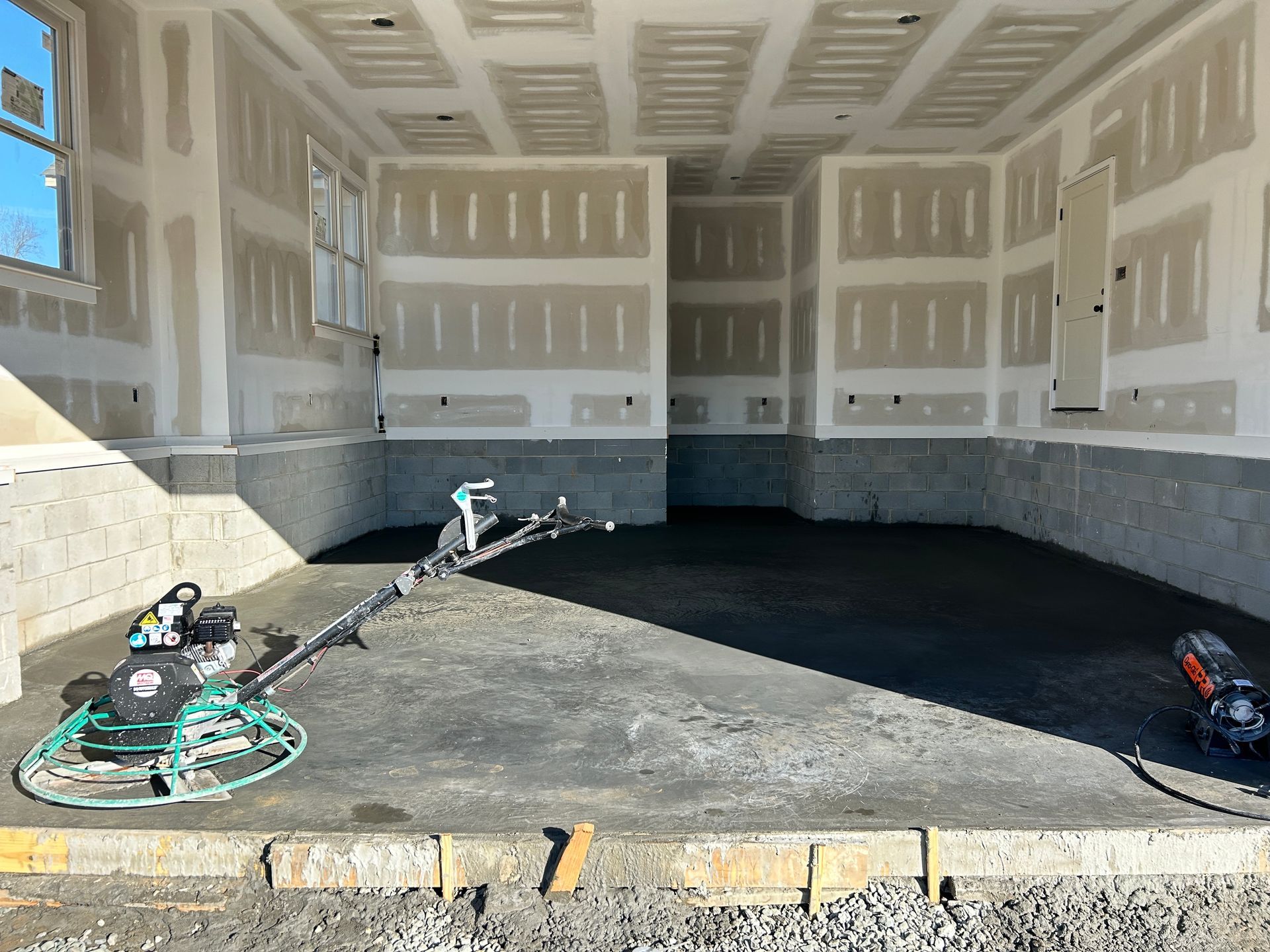
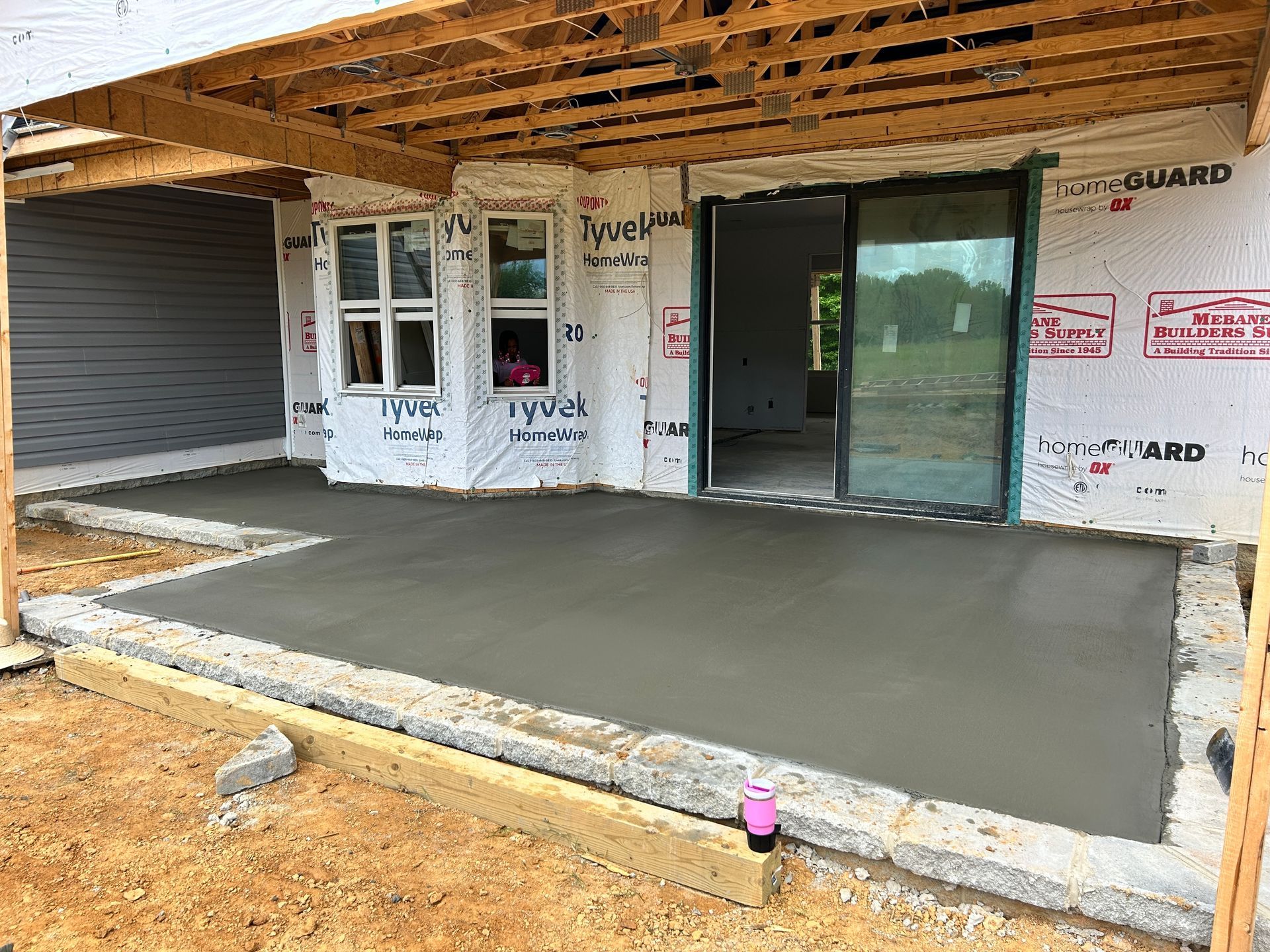
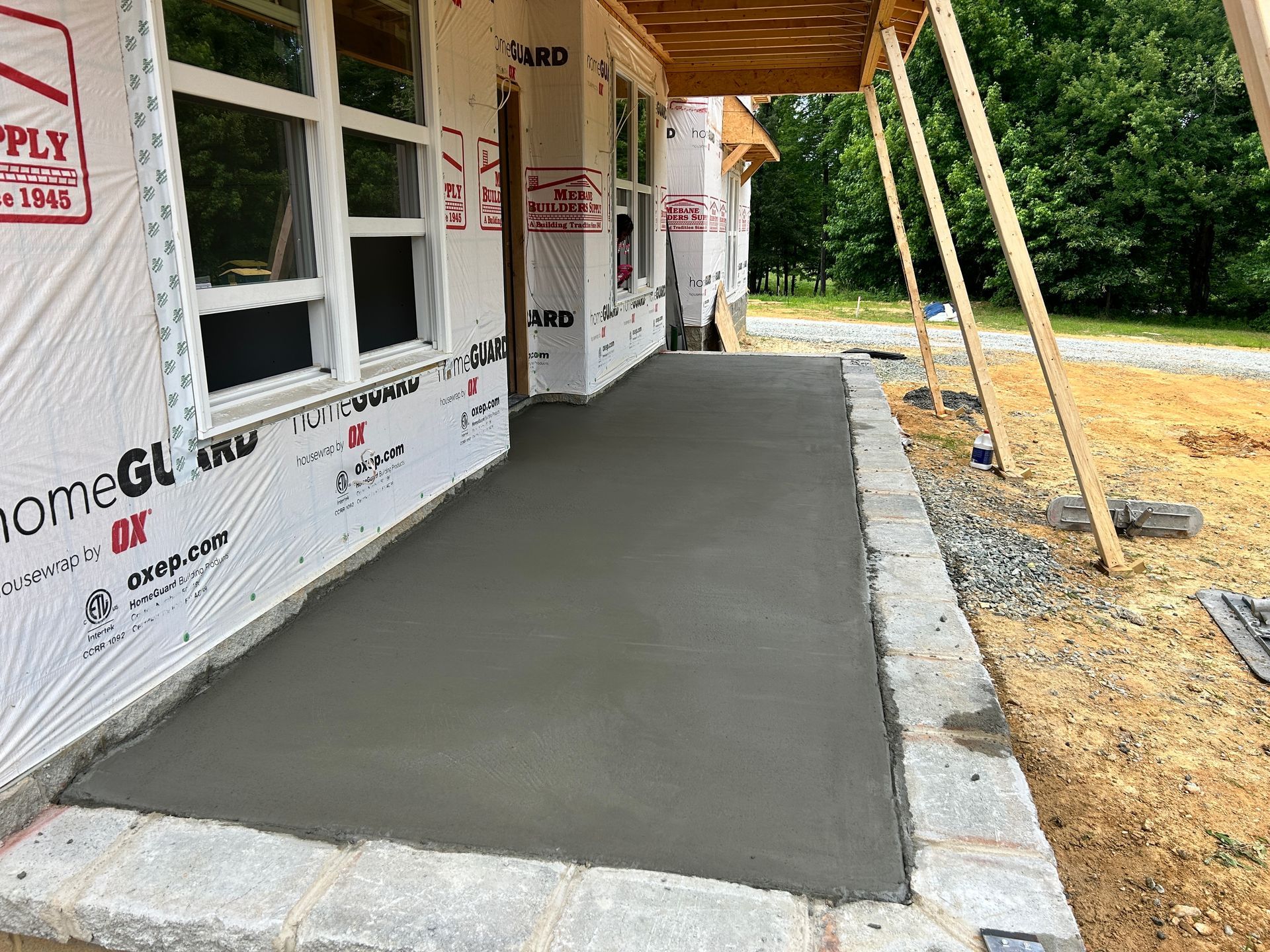
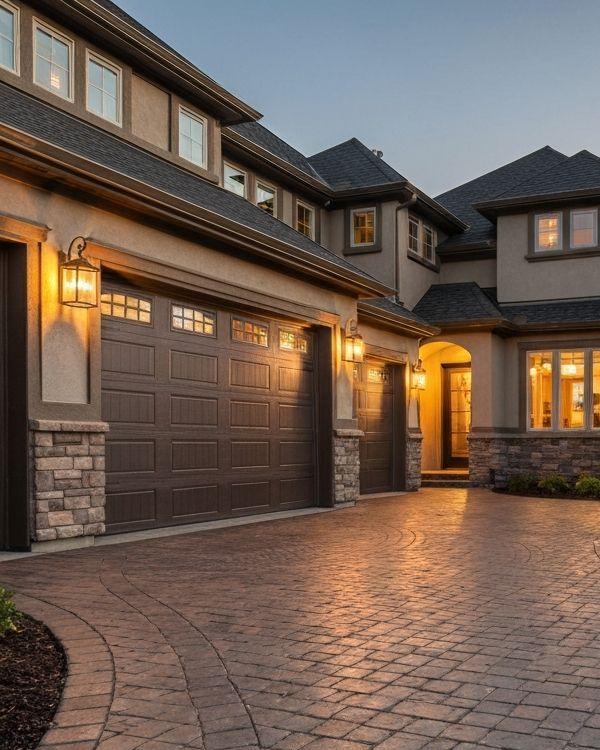
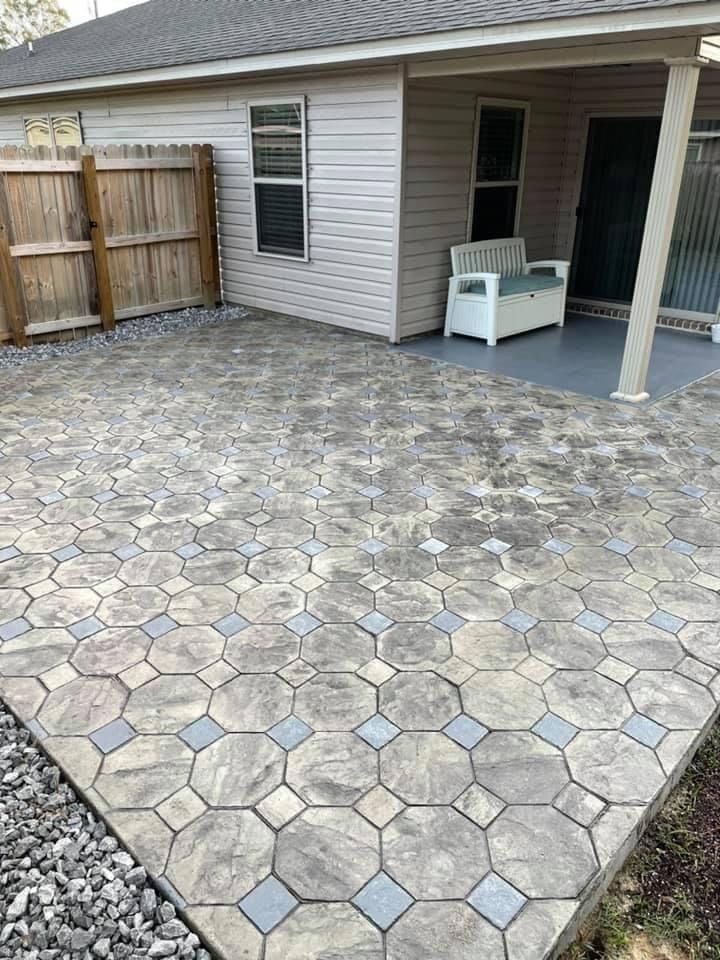
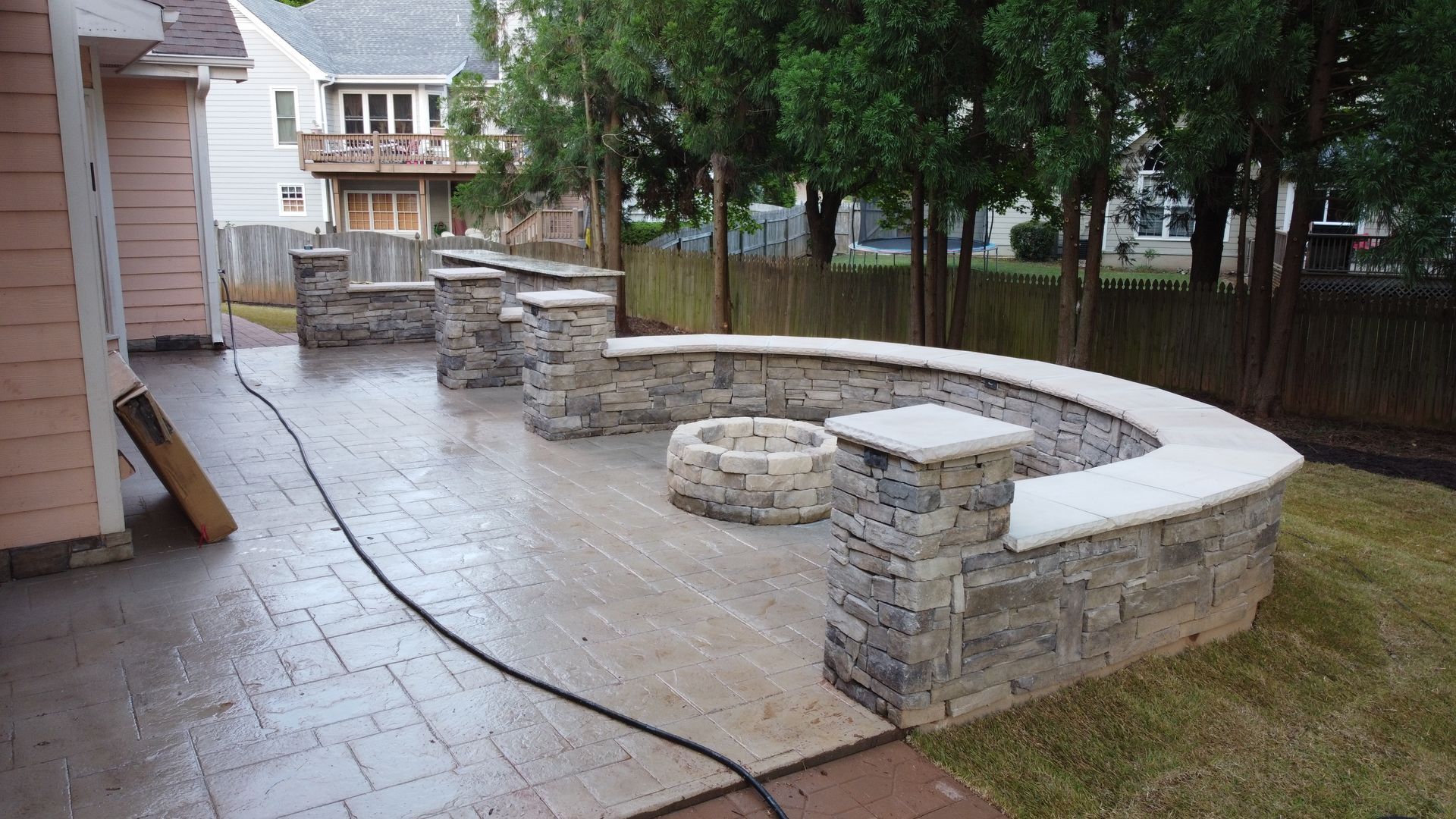
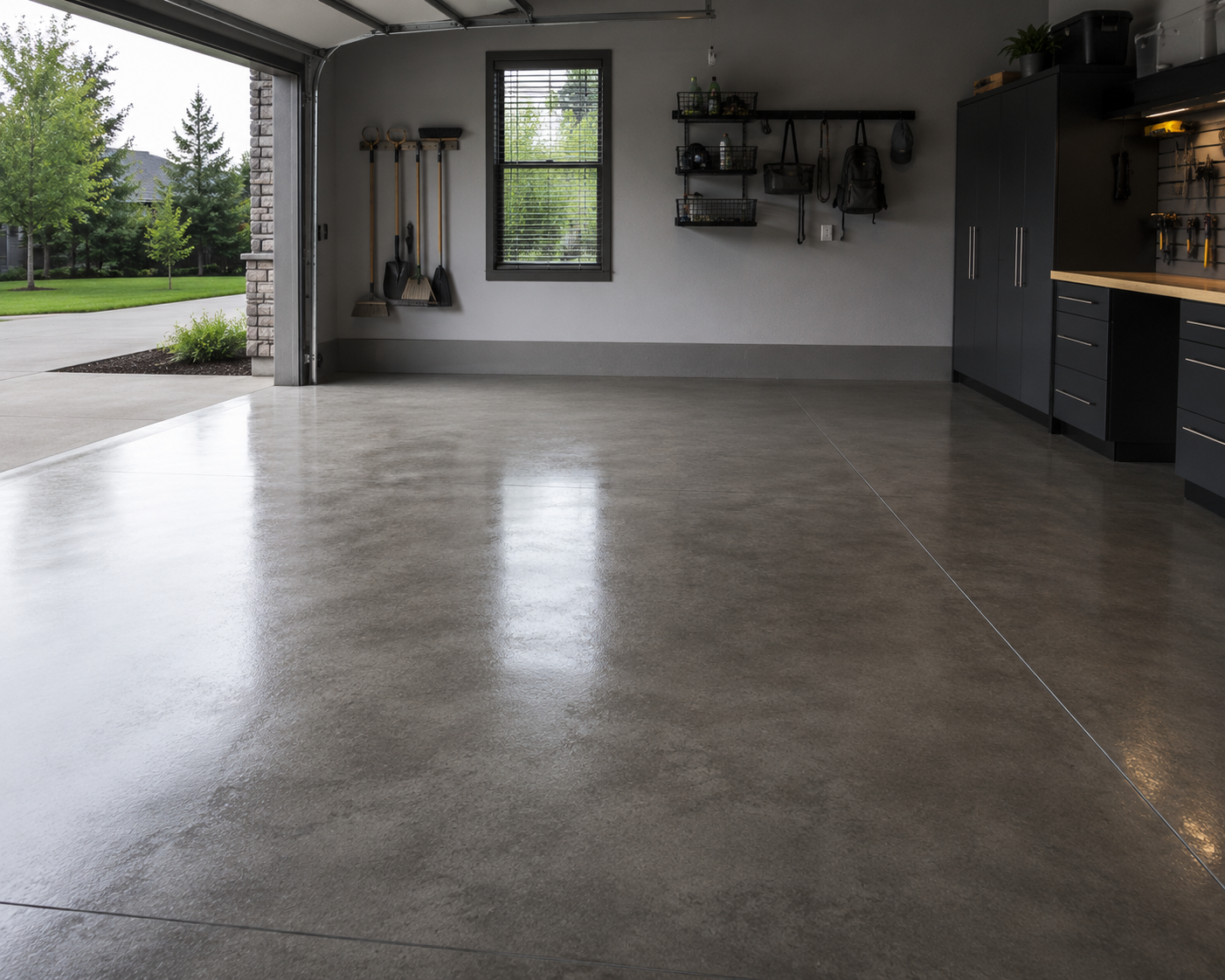
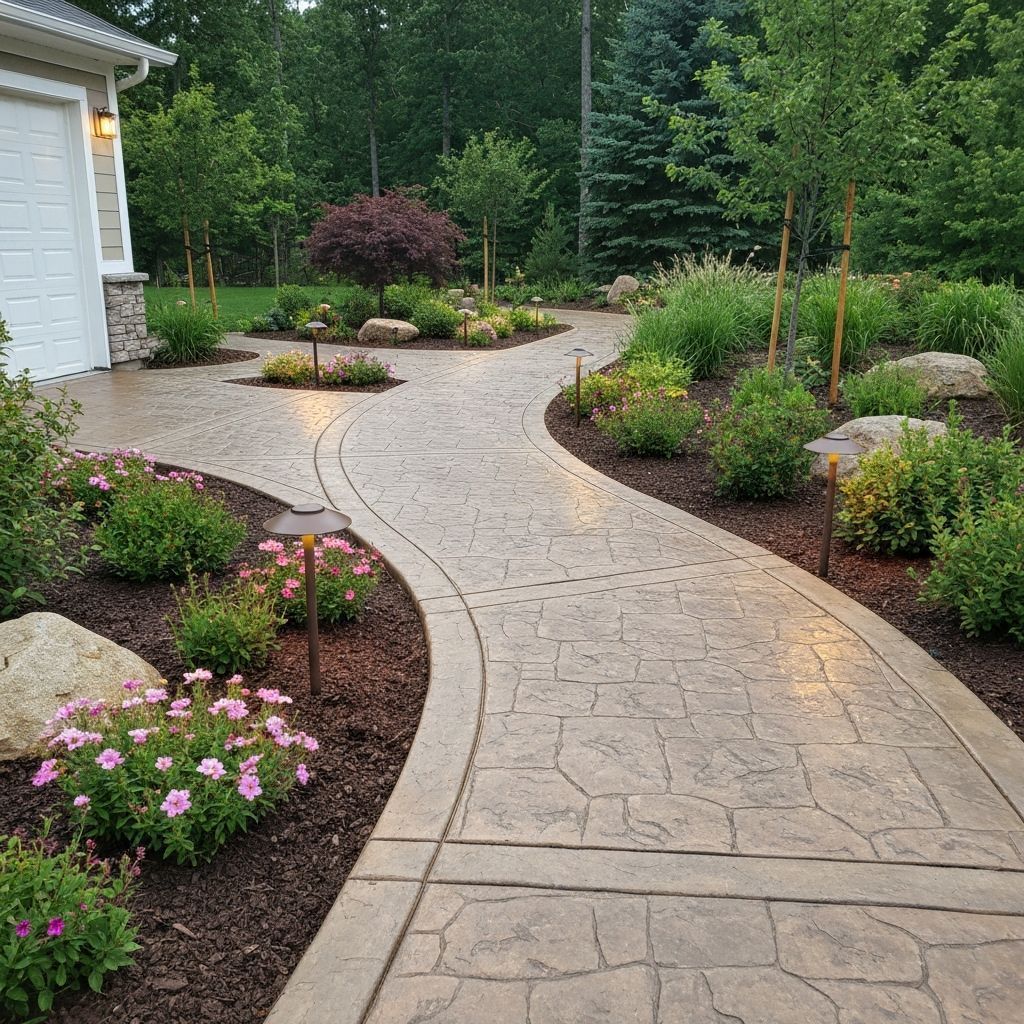
Take a look at completed concrete work across Durham, Raleigh, Cary, Chapel Hill, and Apex. From shed pads and metal building slabs to driveways and patios, every project shown here was poured, finished, and cleaned up by the ADR Construction team.

AREAS WE SERVE
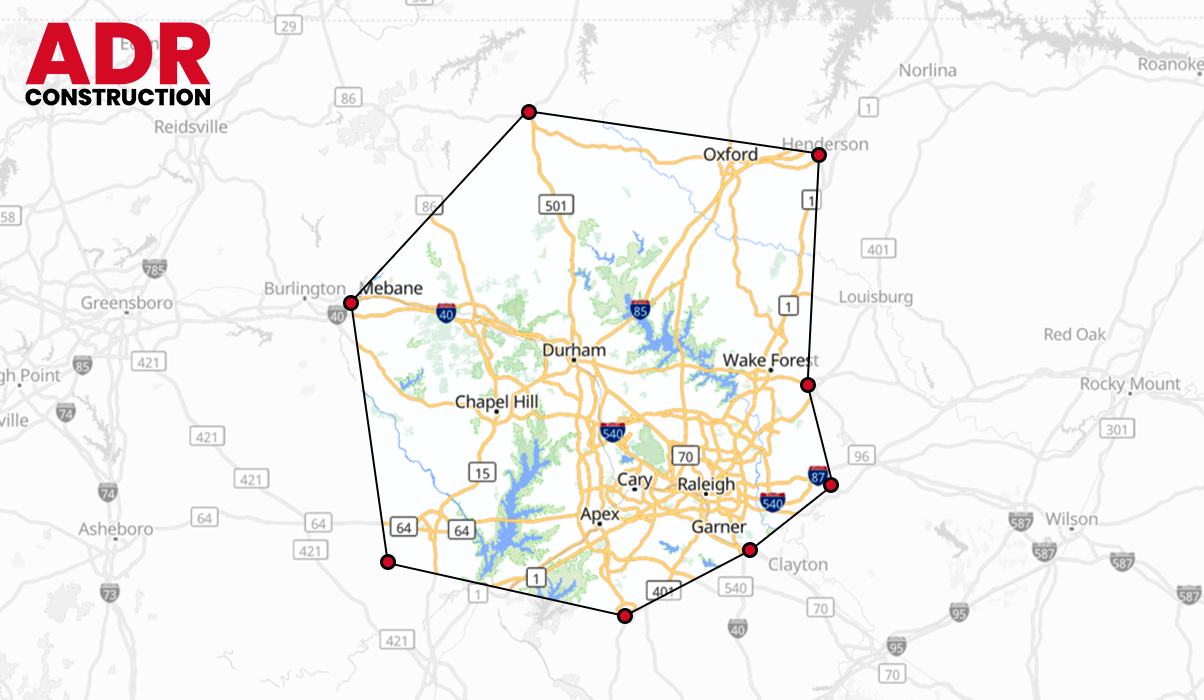
ADR Construction serves homeowners, builders, and contractors across Durham, Raleigh, Cary, Chapel Hill, and Apex with custom concrete slab and pad installation. Visit our service area pages to learn more about the communities we cover.
FREQUENTLY ASKED QUESTIONS
Concrete slab projects raise real questions about cost, sizing, thickness, and timing. Here are answers to the ones we hear most from clients across Durham, NC and the Triangle.
How much does a concrete slab cost in Durham, NC?
Concrete slab costs vary based on square footage, thickness, reinforcement, and site access. For most residential slabs in the Durham area, you can expect a range between $6 and $12 per square foot for a standard 4-inch slab with basic mesh reinforcement. Larger slabs for metal buildings, thicker slabs for heavy equipment, or slabs requiring significant site prep cost more. Smaller pads like HVAC bases often cost more per square foot because of fixed setup costs. We provide detailed written estimates after a site review so you know exactly what your project involves.
What sizes of concrete slabs do you pour?
We pour concrete slabs of nearly any size, from small concrete slabs like 3 by 3 HVAC pads and 4 by 4 generator pads to 30 by 40 metal building foundations and larger structural slabs. Most of our slab work falls between 100 square feet and 2,000 square feet. During the site visit, we discuss the exact dimensions needed for what you plan to put on top and confirm any local requirements or spec sheet dimensions.
How thick should a concrete slab be?
Concrete slab thickness depends on what will sit on it. A shed pad or HVAC unit pad typically runs 4 inches. Slabs supporting metal buildings, workshops, or heavier structures usually need 5 to 6 inches with additional reinforcement. Slabs holding heavy equipment, vehicles, or storage go 6 inches or more. During the estimate, we ask about the load and recommend the right thickness for your specific project.
How long does concrete slab installation take?
A standard residential concrete slab pour usually takes one to two days of active work. Day one covers site prep, forming, and reinforcement setup. Day two is the pour and finishing. Curing before you can set a structure on the slab typically takes 5 to 7 days for lighter loads and 28 days for full curing strength. Larger slabs or those requiring significant site prep take longer, and we give you a real timeline during the estimate stage.
Can you pour a concrete pad for a shed or storage building?
Yes. Shed pads and storage building slabs are one of our most common slab projects. We handle the site prep, forming, base compaction, and pour, and we size the slab to your exact shed dimensions with the right slope for drainage and thickness for the structure weight. If you have the shed spec sheet or dimensions ready, we can quote quickly and coordinate with your delivery date.
Do you install concrete pads for HVAC units and equipment?
Yes. HVAC unit pads, generator pads, and equipment bases are a regular part of our work. These pads need to be level, properly sized for the equipment, and typically 4 inches thick with reinforcement to handle vibration and weight. We coordinate directly with your HVAC contractor on timing so the pad is cured and ready when the equipment arrives.
Can you pour slabs for metal buildings and pole barns?
Yes. Metal building slabs, pole barn floors, and small commercial building foundations are a regular part of our work. These slabs typically need 5 to 6 inches of concrete with proper reinforcement and anchor bolts or embedded connectors for the building frame. We work directly from the building supplier's spec sheet to make sure the slab matches the structural requirements and the anchor layout.
Do concrete slabs need reinforcement?
Most concrete slabs benefit from some level of reinforcement to handle load, temperature changes, and settling. Wire mesh works well for small residential pads and shed slabs. Rebar goes into slabs supporting heavier loads, metal buildings, or structures with significant weight. Fiber-reinforced concrete can be an option for certain projects. During the estimate, we look at the intended use and recommend the right reinforcement for your specific slab.
What causes concrete slabs to crack or shift?
Concrete slabs crack or shift for a handful of common reasons. Poor base preparation is the biggest cause. If the subgrade is not compacted properly, the slab moves and cracks under load. Other causes include the wrong slab thickness for the intended use, missing or insufficient reinforcement, drainage issues that erode the base under the slab, and freeze-thaw cycles that expand and contract the concrete. Small hairline surface cracks are normal, but structural cracking usually points to one of these underlying issues.
Can you add anchor bolts or embedded hardware to a slab?
Yes. Anchor bolts, embedded connectors, and hardware plates are a normal part of most metal building and structural slab pours. We set the anchors according to your building supplier's spec sheet or the structural drawings, position them accurately before the pour, and cast them into the concrete so they cure in place. Getting the anchor layout right on the front end saves major headaches when the building goes up.
Do you coordinate slab timing with builders and contractors?
Yes. Coordinating slab work with other trades is a big part of what we do. That includes builders, HVAC contractors, metal building suppliers, and shed delivery schedules. We ask about your overall project timeline during the estimate stage and plan the pour so the slab is cured and ready when the next crew or delivery arrives. Timing prevents the delays that come from a slab that is not ready or a structure that arrives before the concrete is set.
Can you replace an existing slab that has failed?
Yes. Slab replacement is a common project when an existing pad has cracked, sunk, heaved, or is otherwise failing. We break up the existing slab, haul away the debris, prep the base properly, and pour a fresh slab sized for the intended load. In most cases, replacement is a smarter long-term investment than repeat repairs on a failing slab.
How soon can I put a structure on a new concrete slab?
Foot traffic on a new slab is usually fine after 24 to 48 hours. Light structures like sheds can typically be set on the slab after 5 to 7 days of curing. Metal buildings, heavier structures, and equipment with real weight should wait 14 to 28 days for the concrete to reach full curing strength. We share specific curing timelines during the final walkthrough so you know exactly when different types of loads are safe.
Do you install concrete slabs in Raleigh, Cary, Chapel Hill, and Apex?
Yes. ADR Construction serves homeowners, builders, and contractors across the Triangle for concrete slab installation and pad work. Our primary service area covers Durham, Raleigh, Cary, Chapel Hill, and Apex. If you are located within the greater Triangle region and want a concrete slab poured for a shed, HVAC pad, metal building, or any other structure, reach out and we can confirm coverage during the initial consultation.
Do you offer a warranty on concrete slab installations?
Yes. We back our concrete slab installations with a warranty that covers any crack larger than one-quarter inch. Concrete naturally develops fine surface hairline cracks as it cures, which is considered normal. Structural cracking that goes beyond that hairline threshold is something we take full responsibility for. If it happens within the warranty period, we come back and repair it, no arguments and no surprise charges.