Quick Reference: Which Durham Concrete Projects Need a Permit
Treat this as a starting point, not a final ruling. Your address, your lot, and who maintains your street can all change the answer.
When a Building Permit Comes Into Play in Durham
Building permits for both the city and the county come from one shared office, the
City-County Building & Safety Department. It enforces the North Carolina State Building Code on both sides of the city line. So the building rules match whether you live downtown or out past the city limits.
What State Law Exempts
North Carolina General Statute 160D-1110 exempts single-family work costing $40,000 or less from building permits. The exemption does not apply to load-bearing structures and a few other listed categories. Flatwork poured on the ground usually fits inside it, which covers most of what homeowners call us about:
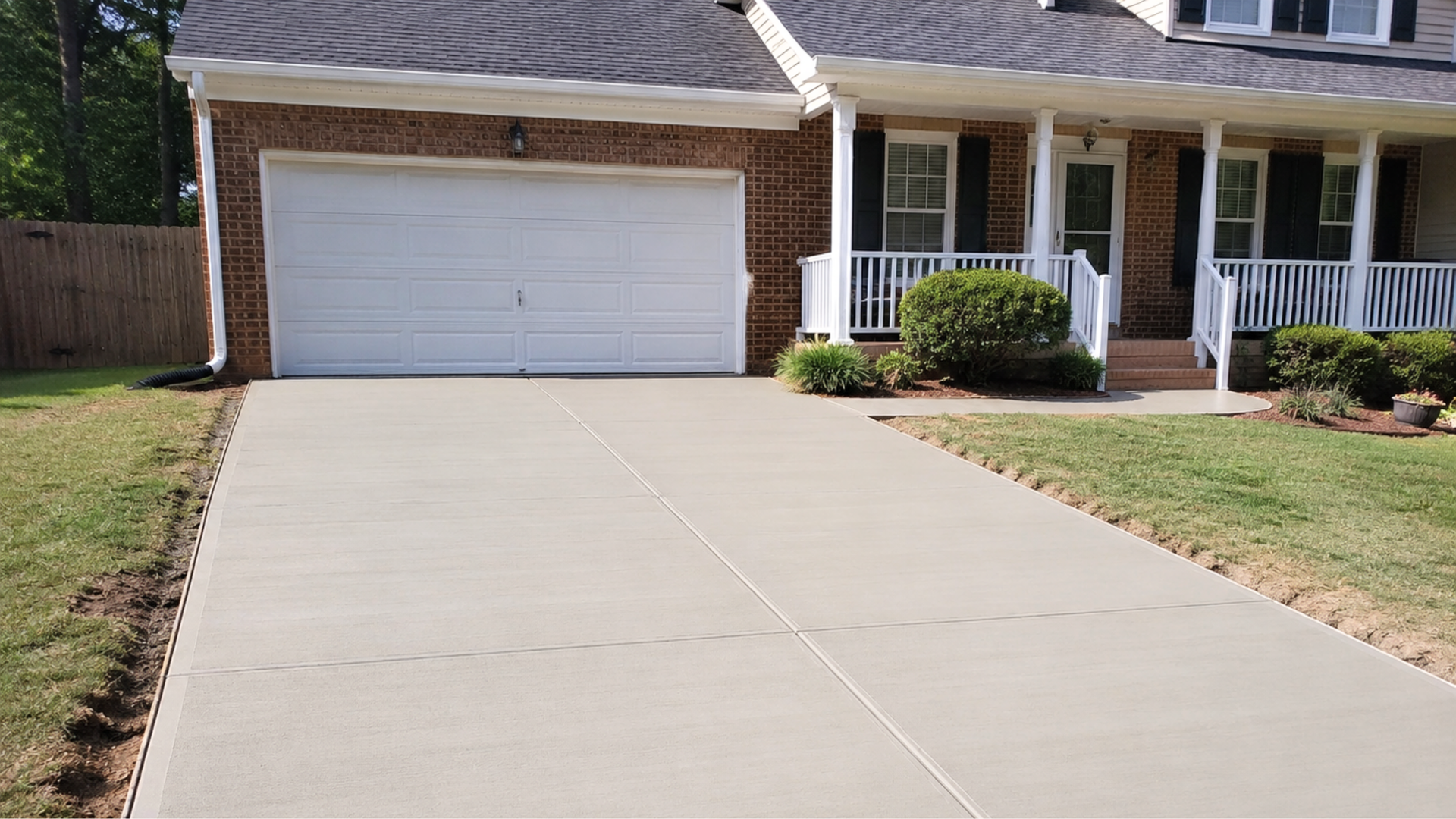
- Driveway replacements on private property
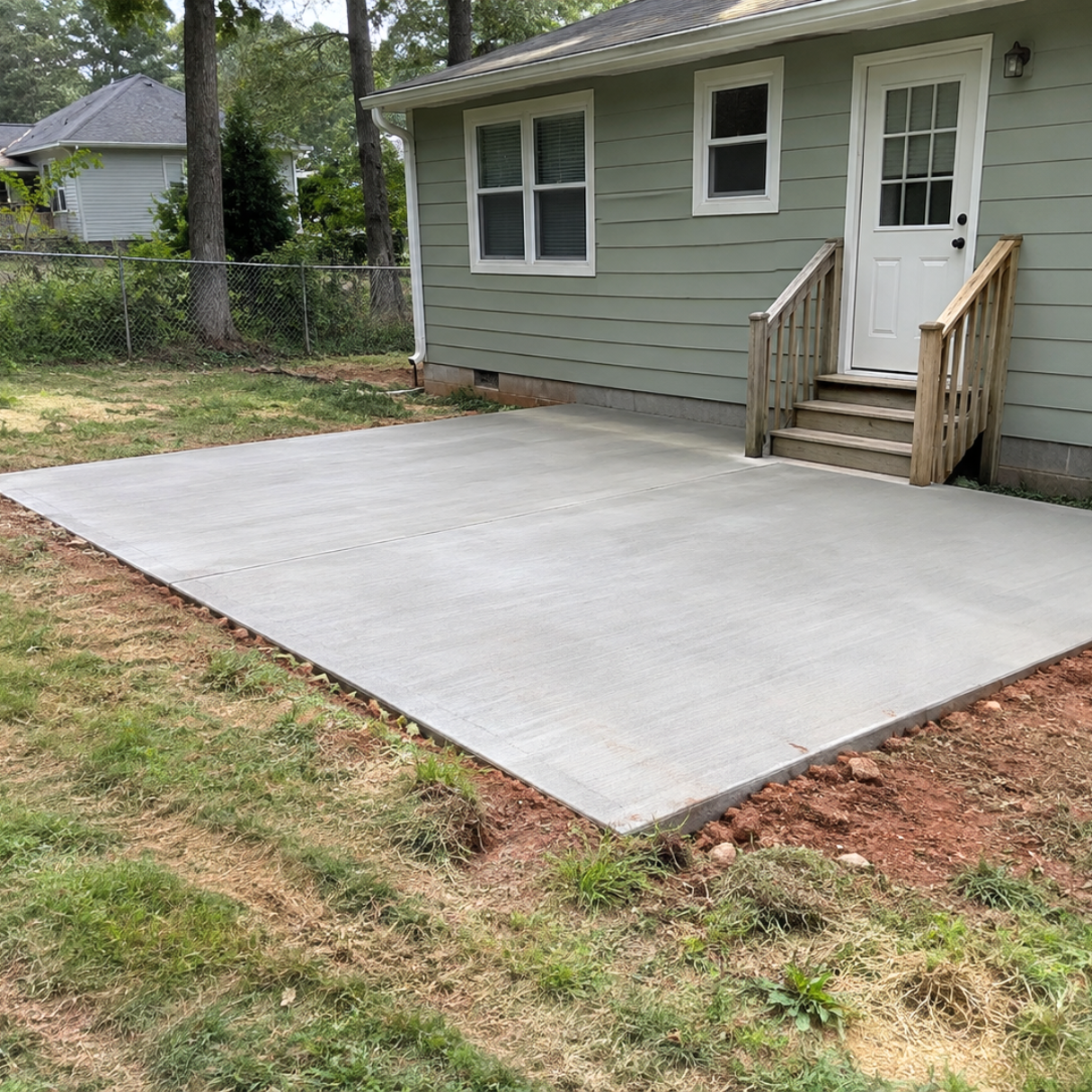
- Patios and backyard slabs
- Walkways that stay on your lot
- Replacing the floor inside an existing garage
What Still Needs One
The line moves the moment concrete starts holding something up. A slab that supports a building is part of that building, and it gets reviewed with it. These are the common cases:
- Slabs under a detached garage, workshop, or pole building
- Footings for additions, decks, and covered porches
- Accessory buildings larger than 12 feet in any dimension, along with the slab beneath
- Any slab with plumbing or electrical running through it
If your project falls on this list, the slab spec matters as much as the permit. Our
concrete slab services page covers how we prep and reinforce slabs that carry structures.
NOT SURE WHAT YOUR PROJECT NEEDS? START HERE
The Driveway Apron and Durham's Right of Way
The strip between your yard and the street belongs to the public, even if you are the one mowing it. In the City of Durham, any construction in that right of way needs a
right-of-way permit, and driveways are named specifically. This is the approval most driveway projects actually run into.
How the City Process Works
The process is straightforward once you know it exists. Here is what the city lists:
- Applications go to Minor Development Engineering for review
- Fees are paid after the application is approved
- The permit expires 90 days after issuance if no inspection has been requested
- A new single-family home driveway is exempt when its plot plan was filed with the building permit
When NCDOT Is in Charge Instead
Outside city limits, most public roads in North Carolina are maintained by the state, not the county. If your driveway connects to one of those roads, the connection falls under an NCDOT driveway permit instead of a city one. We confirm who maintains your road before we price any apron work, because it changes who reviews the plan.
A failing apron is one of the most common reasons homeowners call us in the first place. Our
concrete driveway installation page explains how we handle the apron as part of a full replacement.
Durham's Impervious Surface Limits
This is the rule most homeowners have never heard of. Durham draws drinking water from Falls Lake, Jordan Lake, the Eno River, Lake Michie, and the Little River. Land that drains toward them sits in watershed protection overlay districts, and those districts cap how much of a lot can be covered by roofs, driveways, patios, and other hard surfaces.
Why a Patio Can Put You Over
The cap counts everything on the lot, not just the new project. A house with a long driveway and a detached garage may already be close to its limit before a patio is even sketched. Some zoning districts outside the watershed areas set coverage caps of their own, too.
How to Check Your Lot
Checking takes a phone call and a few minutes of measuring. Do it before the design is final, not after:
- Call the City-County Planning Department at 919-560-4137 to confirm any limit on your parcel
- Look up your existing hard surface on the city's stormwater fee map
- Measure the square footage of the new project
- Ask your contractor to show the math instead of saying it will be fine
The Stormwater Fee Connection
Both the city and the county bill a stormwater fee tied to impervious area. The city's definition of impervious surface includes driveways, patios, and sidewalks. The county notes that longer driveways and added patios can push a residential lot into its highest billing tier, so a big pour can nudge your annual bill up.
Steps Every Triangle Concrete Job Needs Before Digging
Call NC811
North Carolina law requires notice to NC811 at least three full working days before excavation. Utility locators then mark buried gas, power, water, and cable lines with paint or flags. We place this request on every job, including small patios, because service lines are sometimes shallower than anyone expects.
Confirm Zoning Setbacks
Setbacks control how close a structure can sit to your property lines. They matter most for shed and garage slabs, since the building has to meet them even when no building permit is required. A survey or recorded plat shows where your lines actually are, which is not always where the fence is.
Look for Easements
Utility and drainage easements are often recorded on your plat. Concrete poured inside one can be torn out if the utility needs access, and replacing it usually falls on the owner. A quick look at the plat before layout avoids that problem entirely.
What We Handle on Durham County Jobs
Most homeowners do not want to learn the right-of-way process for a single driveway, and they should not have to. On our projects, the approval work comes with the job:
- Confirming whether your street is maintained by the city or the state
- Preparing and filing the right-of-way application when the apron is involved
- Checking impervious coverage before the layout is final
- Placing the NC811 locate request
- Scheduling inspections so the pour date holds
Permits and inspections also add lead time to the schedule, so it pays to start the conversation early. If you are still budgeting, our breakdown of
concrete driveway cost in Durham shows where apron and site work fit into the price.
Frequently Asked Questions
Do I need a permit to repair or resurface existing concrete?
Usually not, as long as the work stays on your property. Crack repair, resurfacing, and sealing an existing slab are treated as maintenance. The exception is anything inside the public right of way, such as a broken apron section or a public sidewalk panel, which still needs city approval.
Who pulls the permit, the homeowner or the contractor?
Either can in many cases, but the contractor usually should because they know the scope and the details. Put in writing who is responsible before work begins. In North Carolina, projects costing $40,000 or more generally require a licensed general contractor.
What happens if concrete work is done without a required permit?
The city can require the work to stop or be brought into compliance. For concrete, that can mean removing a slab poured over a coverage limit or inside the right of way. Unpermitted work can also come up during a home sale, when buyers and inspectors start asking questions.
Does HOA approval replace a city permit?
No. Homeowners associations and local government run on separate rules, and approval from one does not cover the other. Many Durham-area HOAs require architectural review for driveway widening, color changes, or new patios, so plan for both if you live in one.
Are the rules different in parts of the county inside other towns?
Yes. Small portions of Durham County sit inside the limits of Chapel Hill, Raleigh, and Morrisville. Those properties follow that town's development and right-of-way rules, so check which jurisdiction appears on your property tax record before assuming the City of Durham process applies.
Not Sure Which Rules Apply to Your Lot?
Tell us the address and what you want to build, and we will sort out which approvals apply before the estimate is final. ADR Construction has worked across Durham and the Triangle for over 20 years. Call
(919) 530-9922 or request a free estimate, and we will take it from there.