Matching Slab Thickness to How You Use the Garage
Thickness is the cheapest thing to get right and the most expensive to fix. The question is not what the garage holds today, but what it will hold in ten years.
Tell your contractor the heaviest thing that will ever sit on the slab, not the average. Adding an inch during the pour costs far less than replacing a cracked floor. Our
garage floor installation page covers how base prep and reinforcement get specified once the use is clear.
Finishes and What Each One Means for Sealing
This is where the three decisions start to overlap. Each finish leaves a different surface texture, and texture controls how a sealer behaves on it.
Broom Finish
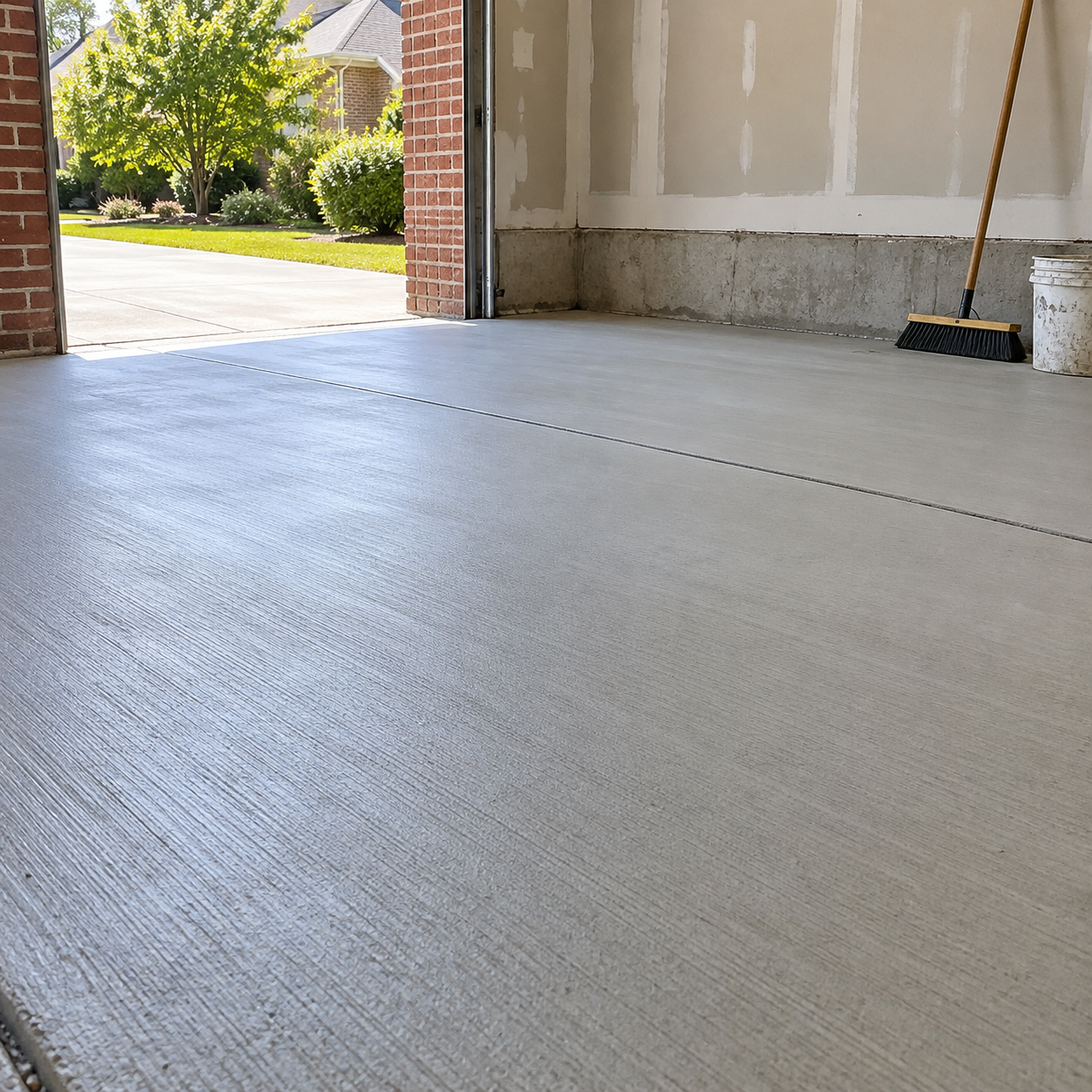
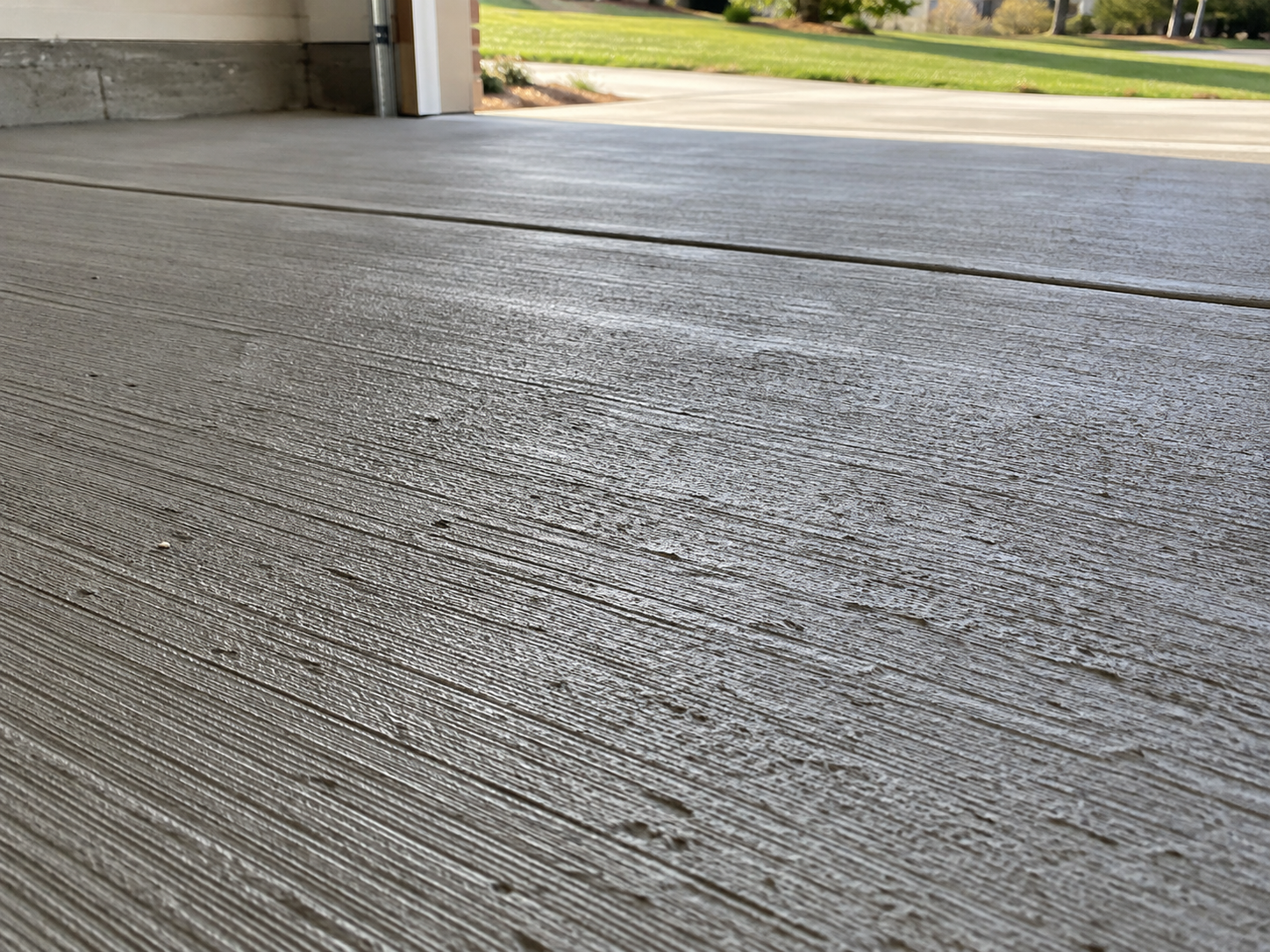
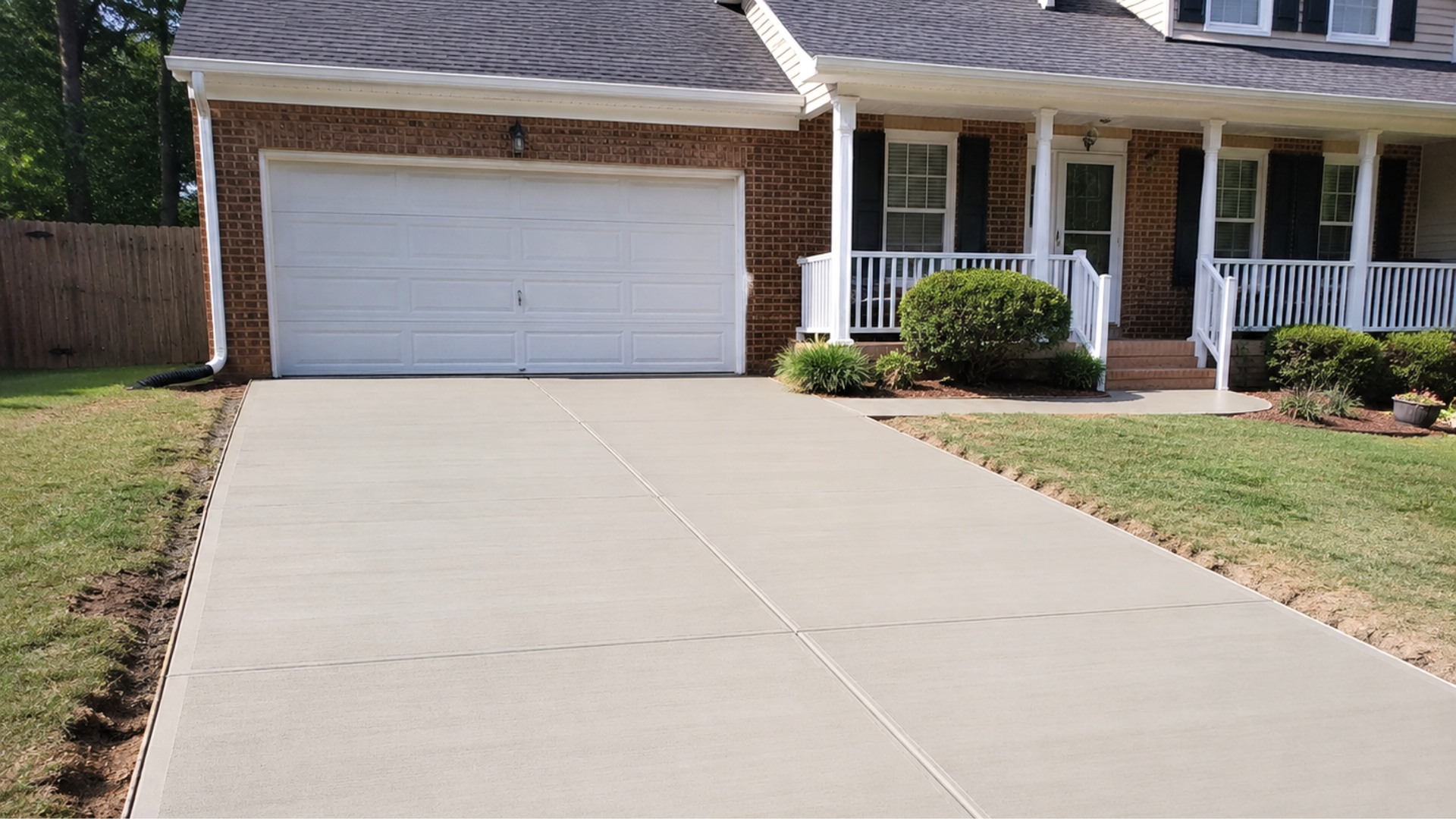
A broom finish leaves fine ridges across the surface. It is the standard for working garages because it grips underfoot when the floor is wet or dusty.
Those ridges hold penetrating sealers well. Thick film-forming products are a poorer match, since they pool in the low points and leave an uneven sheen.
Smooth Trowel Finish
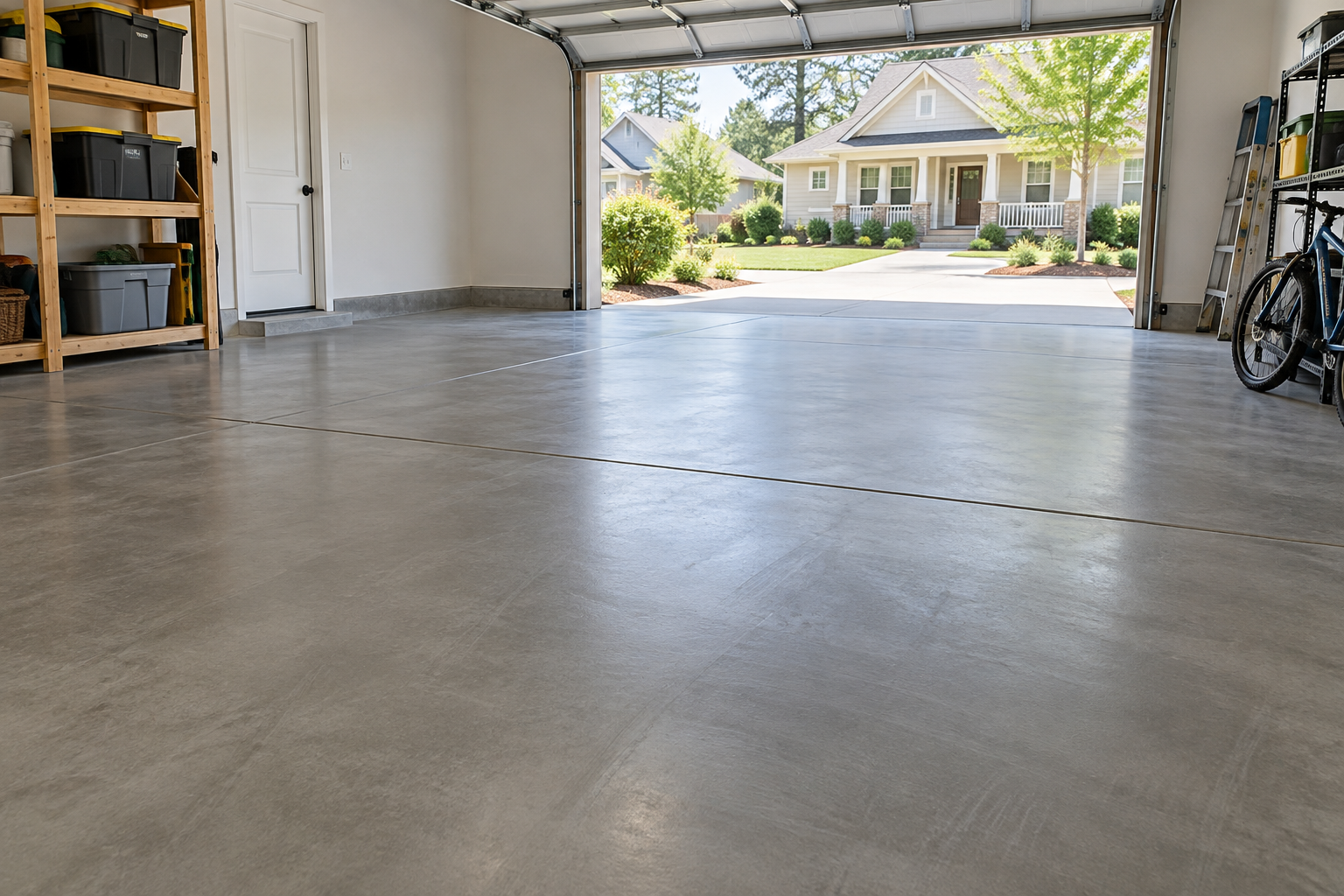
Steel troweling closes the surface, leaving it dense and easy to sweep. It is the usual pick for finished garages, hobby spaces, and anywhere the floor is part of the look.
A dense surface absorbs less, so penetrating sealers have less to grab. Smooth slabs suit coatings better, though a sealed smooth floor gets slick when wet and usually needs a grit additive.
Colored and Decorative Options
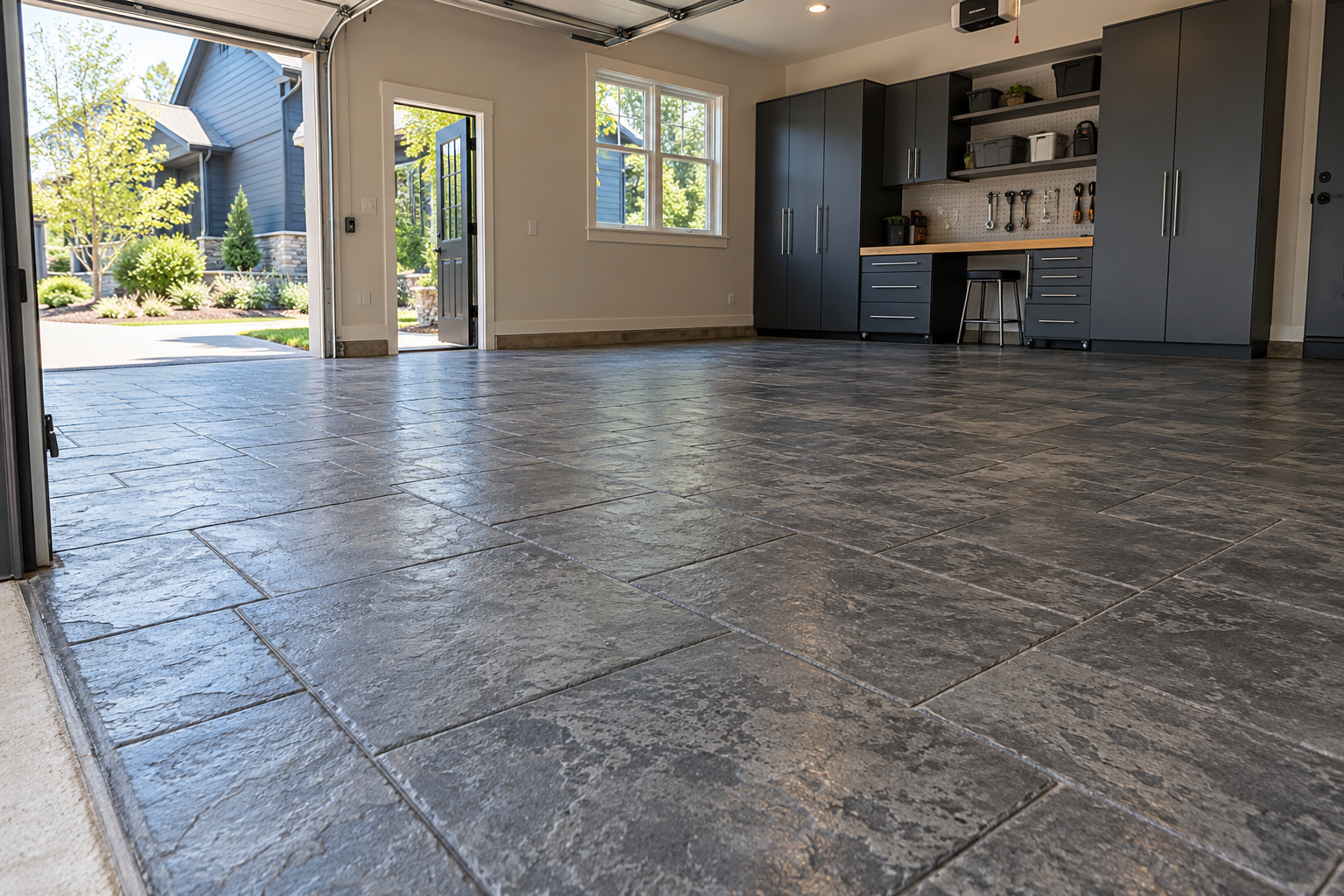
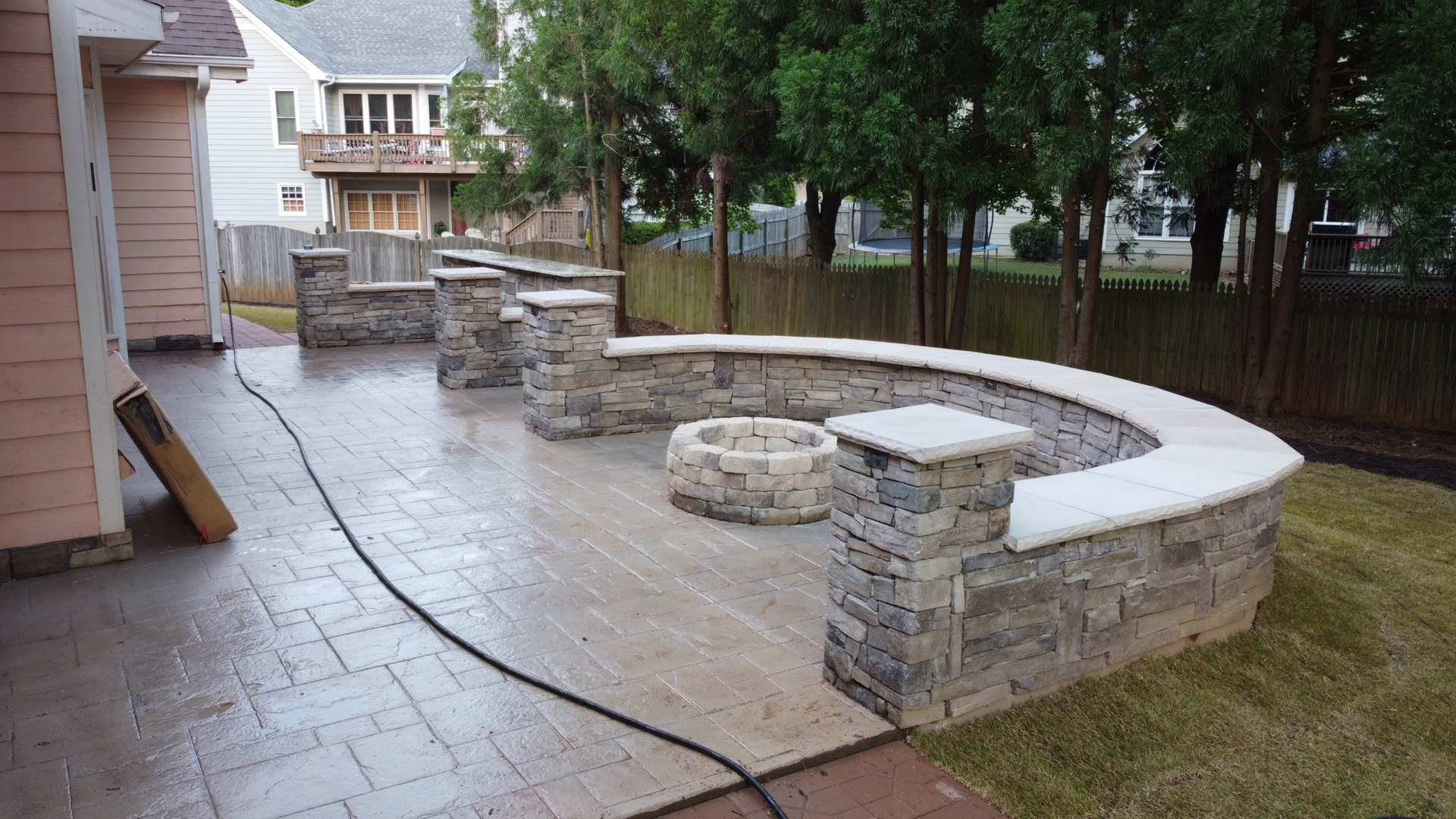
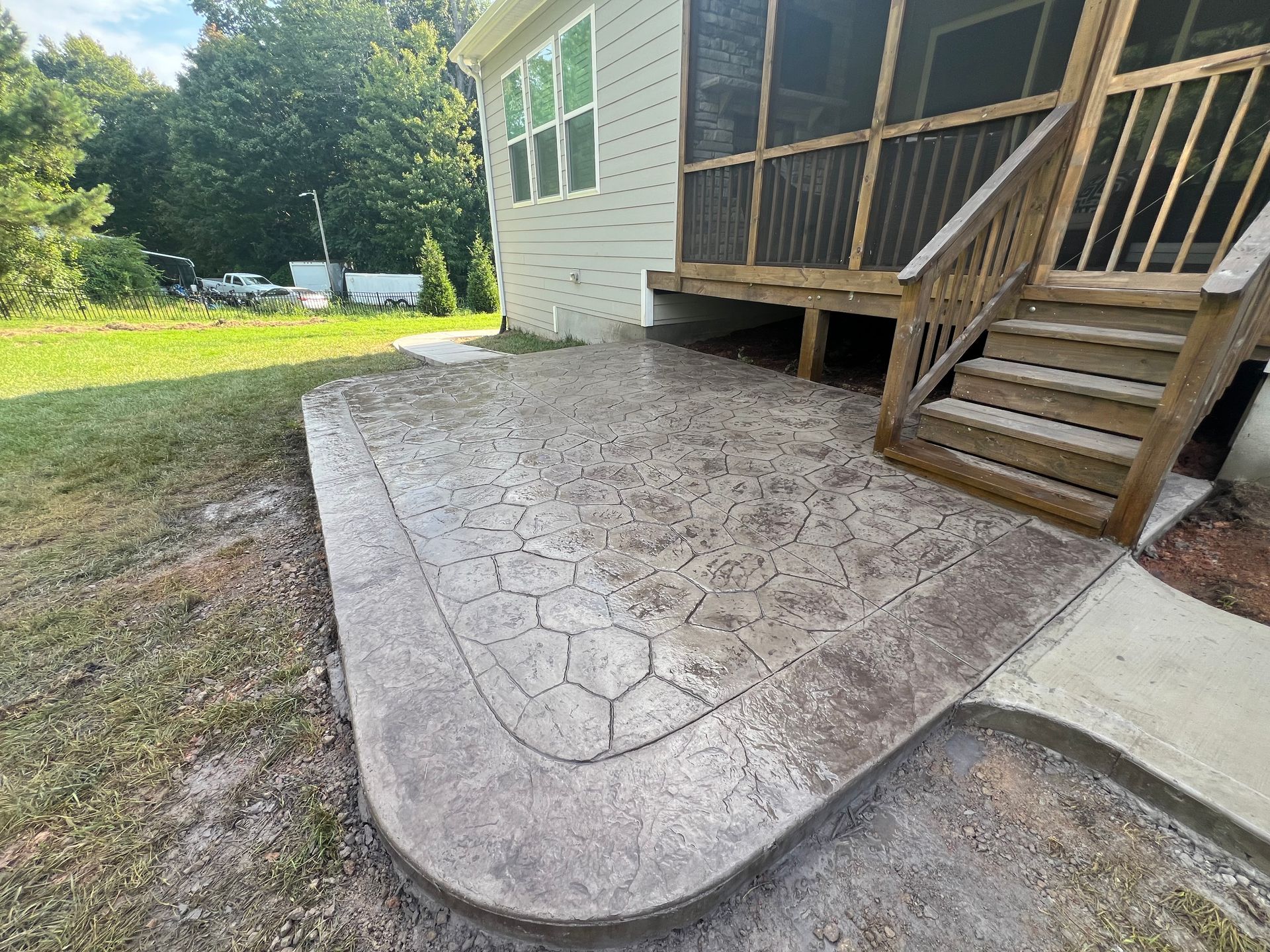
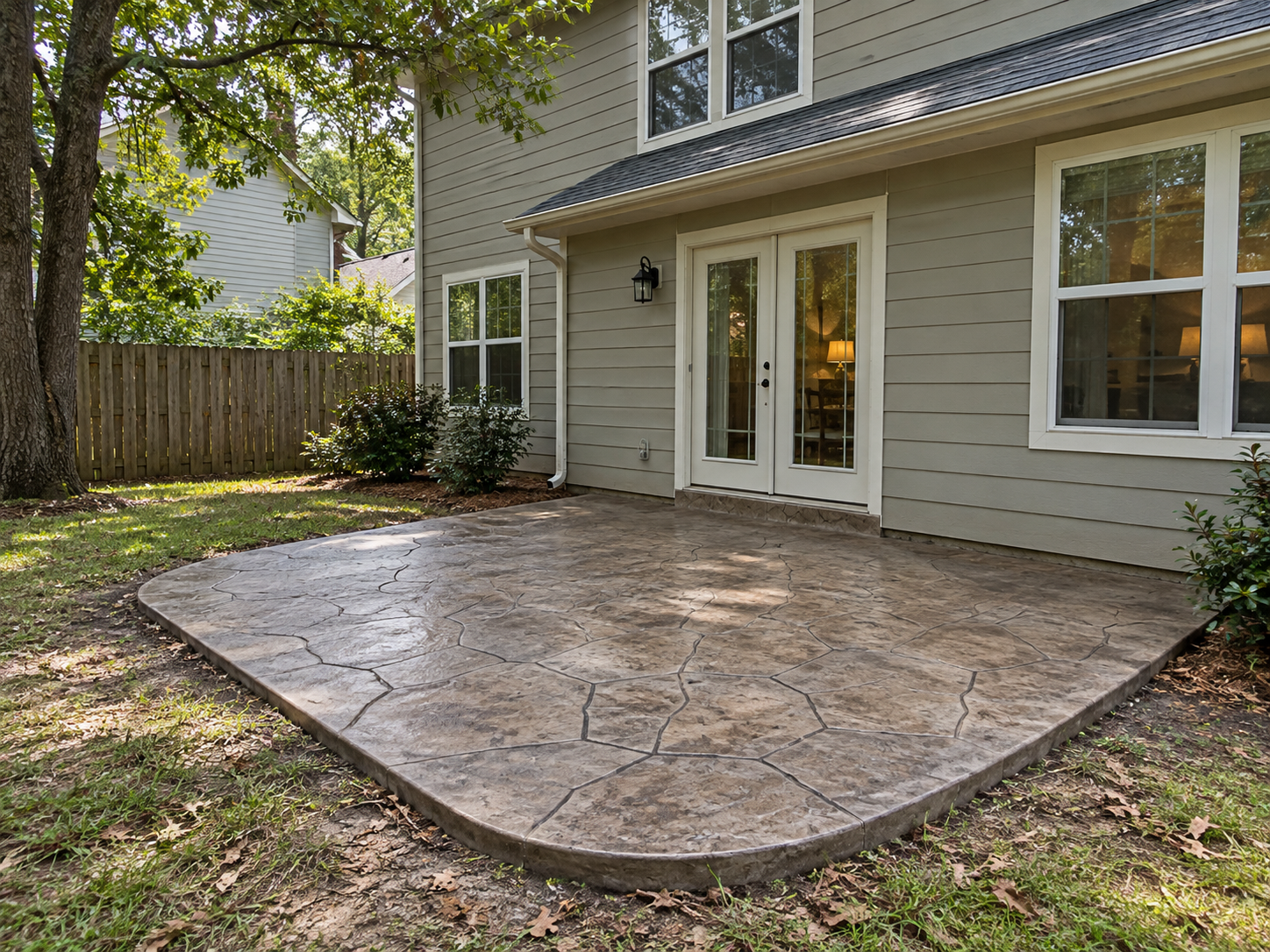
Integral color and stamped patterns both work in a garage, and both raise the stakes on the sealer. The finish you paid for is what a failing sealer takes with it when it lifts.
Hot tire pickup is the specific risk. Tires come off the road hot, soften cheaper film-forming sealers, and pull them away from the slab in patches when the car is moved.
Why Sealing Matters in Durham's Climate
Sealing is the step most often skipped. Local conditions make skipping it costlier here than it would be in a dry climate, and the reason sits under the slab rather than on it.
Moisture Rises Through the Slab
Soil under a slab on grade stays close to saturated, whatever the depth of the water table. That moisture moves up through the concrete as vapor, year after year.
Add the humidity the Triangle carries for much of the year and the slab rarely gets a long dry stretch. A coating that seals the top face without accounting for what pushes up from below is the classic failure.
Older Garages Often Lack a Vapor Barrier
Moisture testing only tells you something useful when there is an effective vapor retarder under the slab, as the
NRMCA guidance on vapor retarders
 Open
explains. Plenty of garages attached to older homes here were poured before that was standard practice.
If your garage dates to the mid-century or earlier, assume there may be nothing between the slab and the clay. That does not rule out a coating, but it does change which product will survive on it.
A Test You Can Run Yourself
Before buying any coating kit, tape a two-foot square of clear plastic sheeting tightly to the bare slab and leave it for a day or two. Condensation under the plastic or a dark patch on the concrete means moisture is actively moving through.
A clean result is encouraging but not proof. It reads the surface only, so a dry-looking test can still sit above a slab that will fail a proper moisture reading.
Choosing Between Sealers and Coatings
There is no universal threshold that makes a slab ready for a given product. The manufacturer's own limit governs, which is why reputable installers test and then match the product to the reading.
Industry testing generally looks for a vapor emission rate under roughly three to five pounds per 1,000 square feet in 24 hours, or in-slab humidity somewhere in the 75 to 80 percent range. Treat those as orientation rather than a pass mark, and check them against whatever the product calls for. The
NRMCA guidance on concrete slab moisture covers the test methods in plain terms.
Timing and Maintenance
When to Seal a New Floor
New concrete has to cure before anything goes over it, and it has to dry for far longer than it needs to cure. Drying is measured in weeks to months, not days.
Weather shapes that window, since a slab poured into a humid stretch gives up moisture slowly. Our guide to the
best time of year to pour concrete in Durham explains how the local calendar affects scheduling.
How Often to Reseal
Resealing intervals depend more on the product than on the floor. Penetrating sealers can last years with no visible change, while acrylics often need attention every couple of years.
Watch the floor rather than the calendar. When water stops beading and starts darkening the concrete, the sealer has stopped doing its job.
Frequently Asked Questions
Can I coat a garage floor that already has old paint or sealer on it?
Not directly. Whatever is already down has to come off, usually by grinding, because a new coating bonds to concrete rather than to an old finish. Patchy removal is the most common reason a second coating fails faster than the first.
Does a garage floor replacement need a permit?
Replacing a slab inside an existing garage generally does not, though a new detached garage is a different matter since the structure and its slab get reviewed together.
Will sealing stop my garage floor from getting dusty?
Usually, yes. Dusting happens when a weak top layer breaks down under traffic, and both penetrating sealers and coatings bind that surface. Dusting that persists after sealing points to a finishing or curing problem instead.
Is a floor drain worth adding to a garage?
It depends on the garage and on local rules, worth confirming before you plan one. Many homeowners get what they need from a properly sloped floor that moves water toward the door, which costs nothing extra when planned before the pour.
Talk Through Your Garage Floor
Tell us how you use the space and we will walk you through thickness, finish, and whether a coating makes sense for your slab. ADR Construction has poured garage floors across the Triangle for over 20 years. Call
(919) 530-9922 or request a free estimate.
REQUEST A FREE ESTIMATE
CALL US NOW