Stamped Concrete Patio Ideas for Durham Homes

October 12, 2026
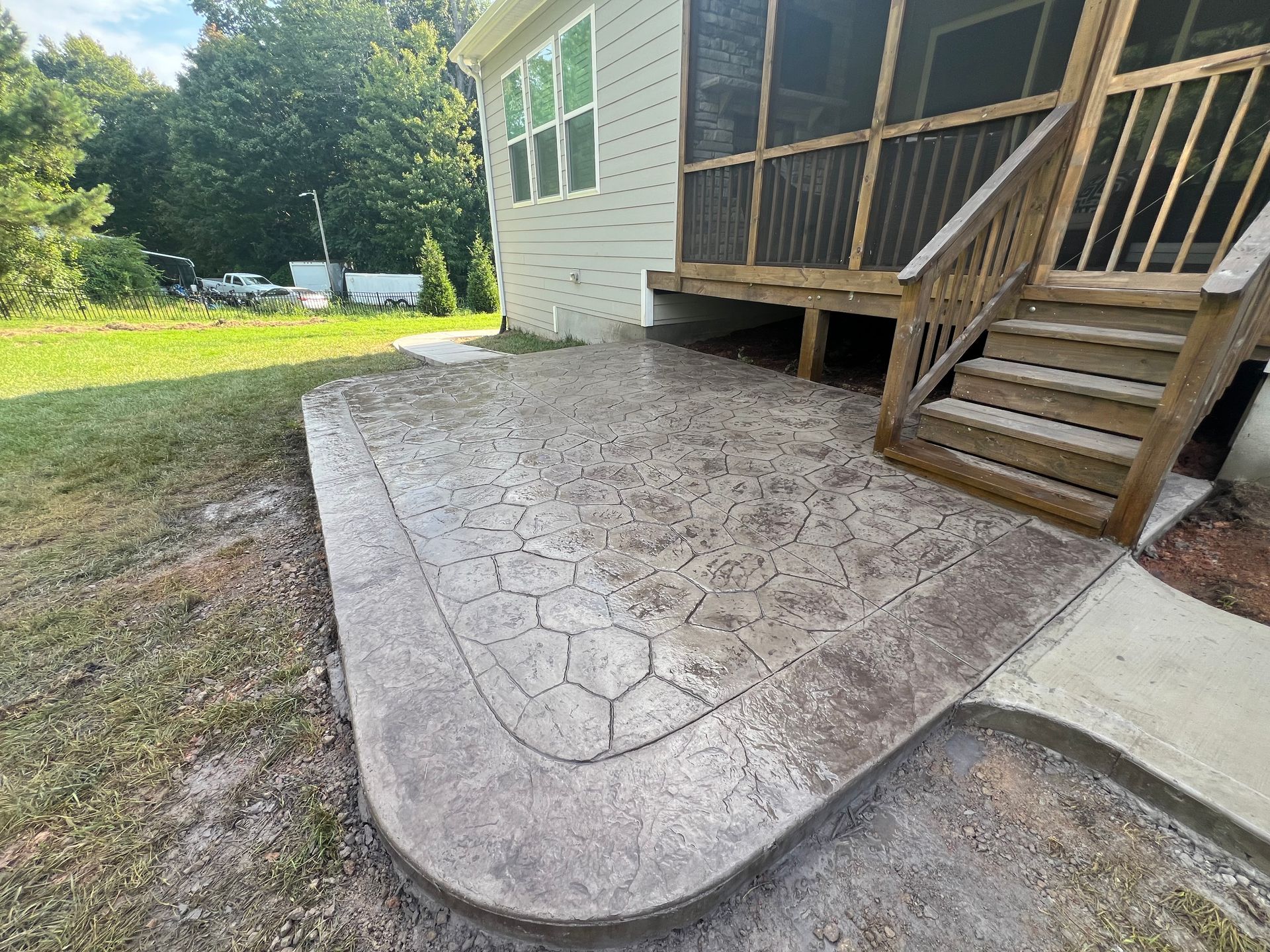
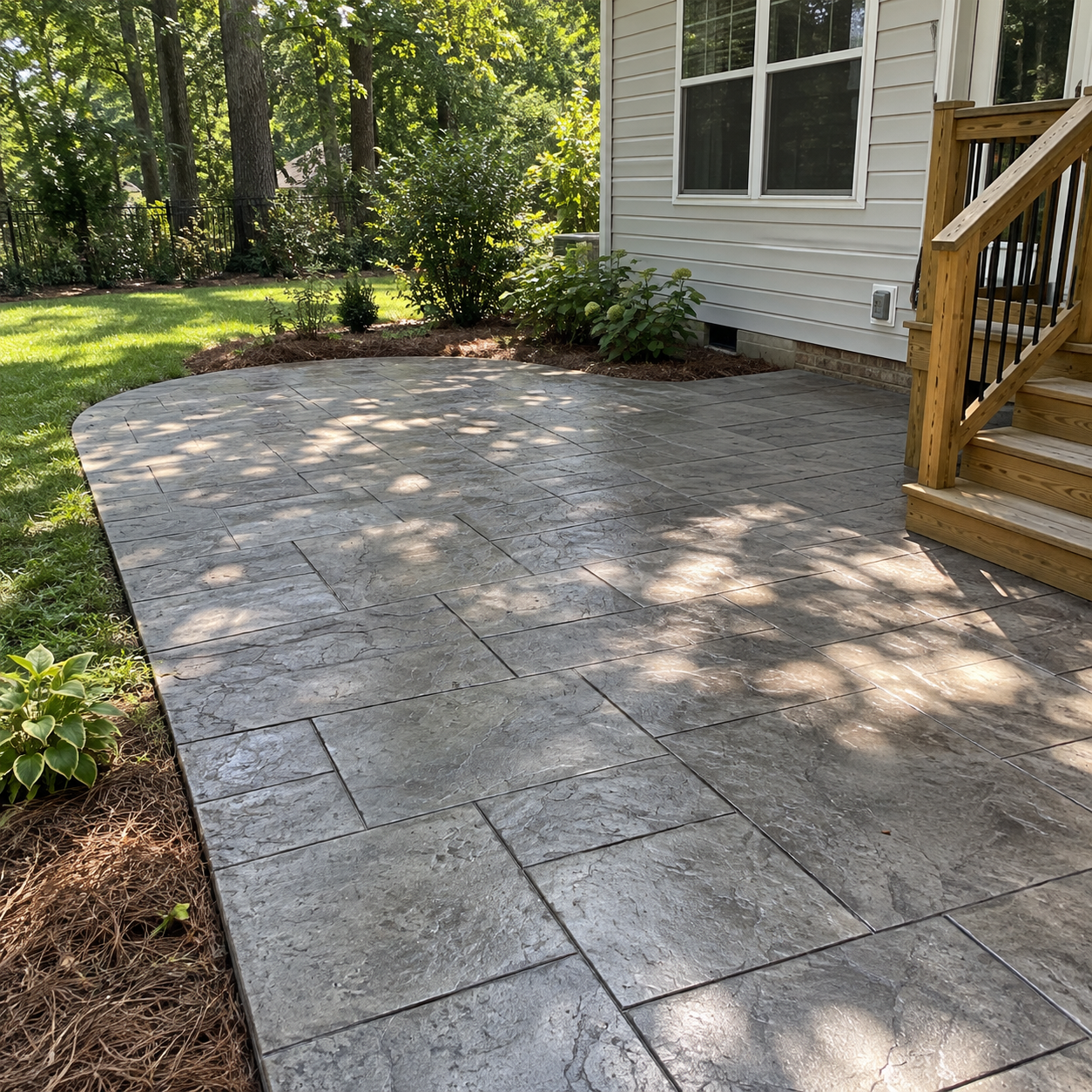
Stamped concrete patio with stone pattern in a shaded Durham, NC

A stamped concrete patio is one of the few upgrades that changes how a Durham, NC backyard gets used. Done right, it turns a patch of grass nobody walks on into the place everyone ends up. Done without a plan, it reads as a gray rectangle with a pattern pressed into it.


The difference comes down to decisions made before anyone orders concrete. Which pattern suits the house. Which color still looks good in April when pine pollen coats everything. Whether the shape follows the yard or fights it.


Durham makes those choices more interesting than most markets. Housing stock here ranges from 1920s bungalows near Duke's East Campus to Colonial Revival and Tudor homes south of downtown to new builds with clean modern lines. Mature oaks and pines shade a lot of local yards, and the clay underneath moves with the seasons. A patio design that looks great in a catalog can look wrong against a specific house on a specific lot.


Below are design directions worth considering, grouped the way homeowners here actually decide. Start with the house, then account for the yard, then work out the layout.
Start With Your Home's Architecture


Pattern choice works best when it borrows from something already on the property. Look at the foundation, chimney, porch, and any existing walkway before picking from a sample board.


Craftsman and Bungalow Streets

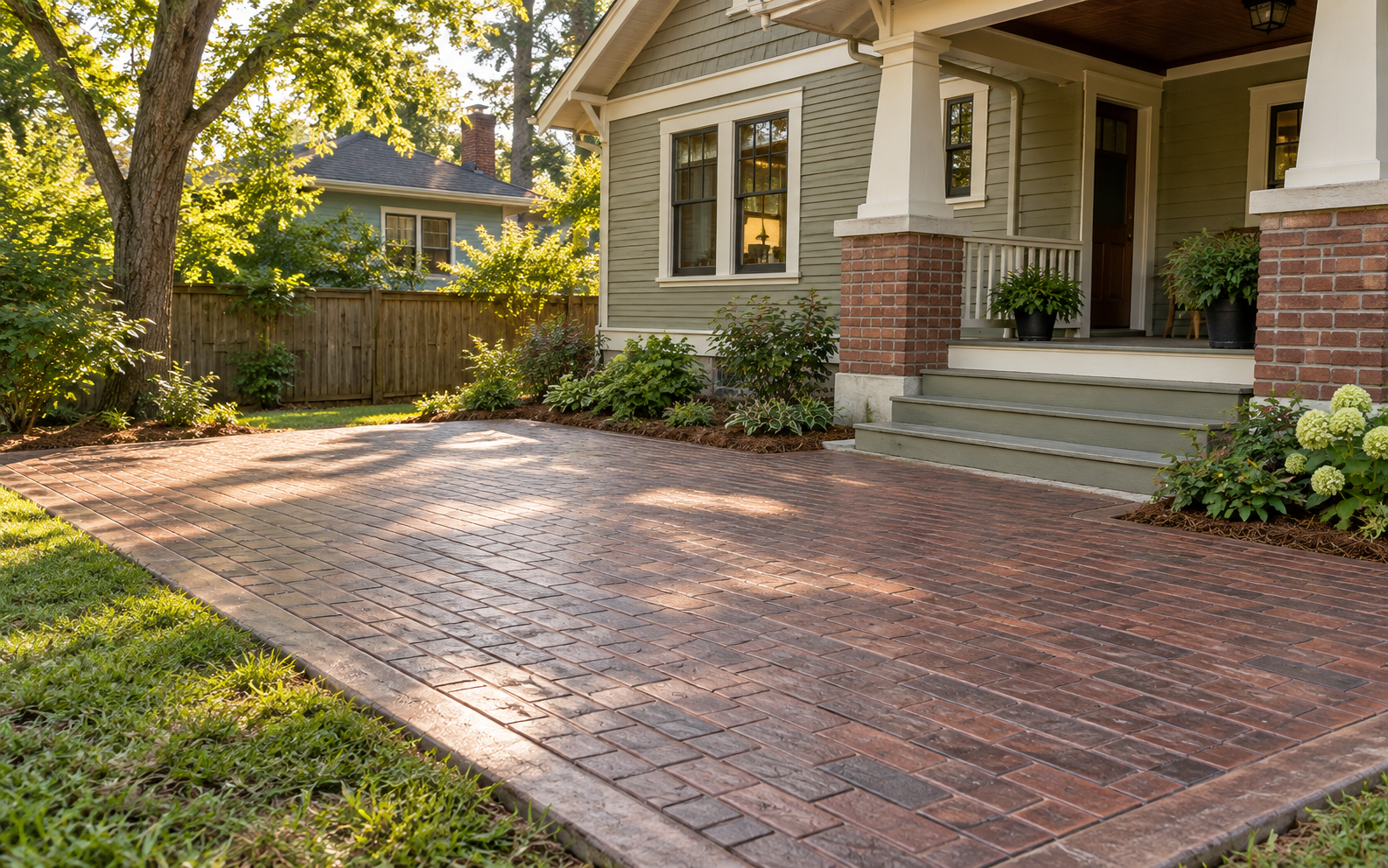
Running bond brick stamped concrete patio beside a Craftsman bungalow in Durham, NC

Trinity Park, Watts-Hillandale, and Tuscaloosa-Lakewood are full of early 1900s bungalows with deep porches, exposed rafters, and brick or stone foundations. These homes reward restraint, since a busy pattern competes with detail the house already has.


  • Running bond or herringbone brick, matched to the foundation brick
  • Large-format slate with wide, quiet joints
  • Simple square or ashlar cut patterns that echo porch piers
  • Warm earth tones rather than cool grays


Colonial Revival and Tudor Streets

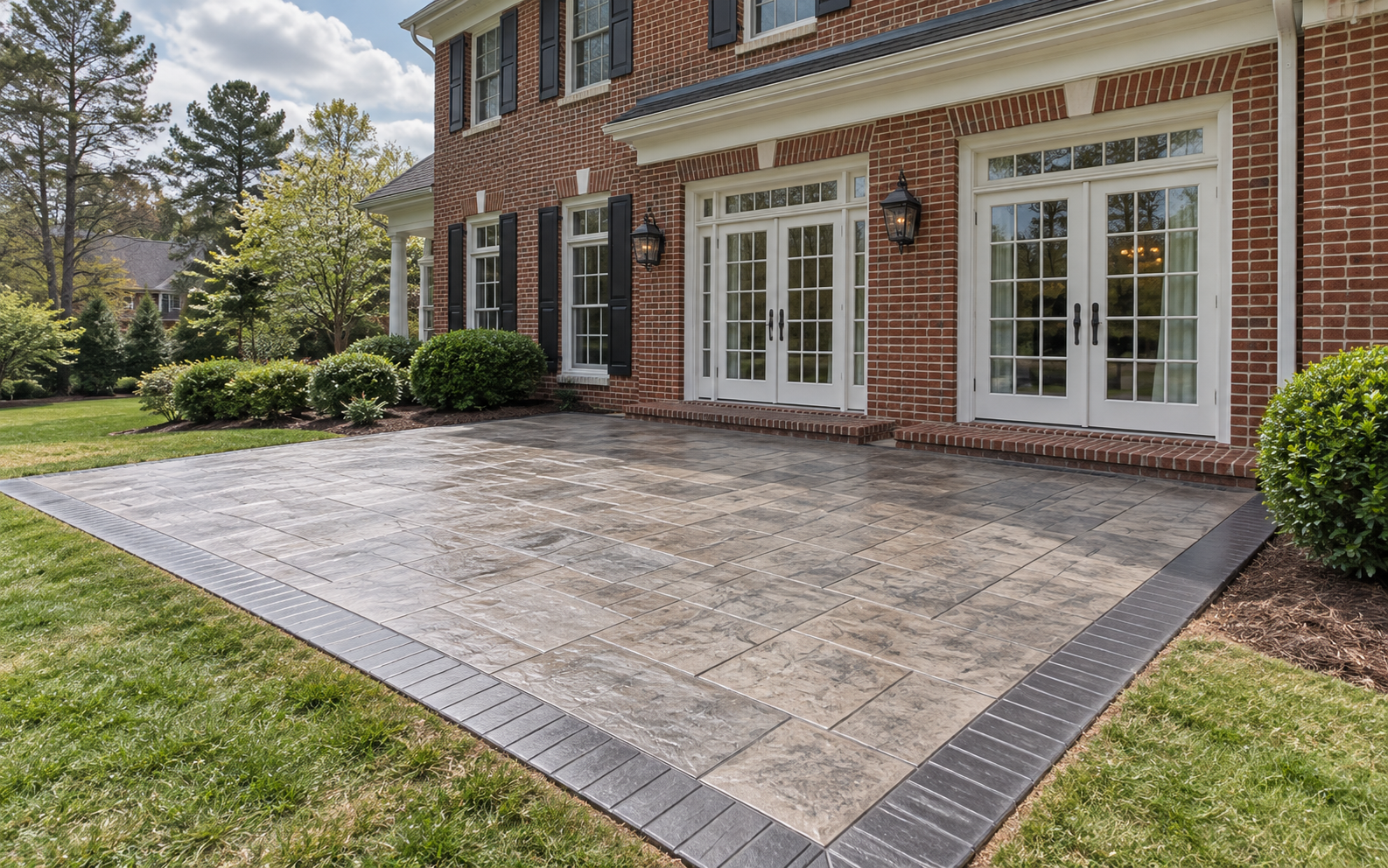
Ashlar slate stamped concrete patio with soldier course border at a Colonial Revival home

Forest Hills and Hope Valley lean formal, with symmetrical facades and established landscaping. Patios here tend to look best when the geometry is deliberate rather than loose.


  • Ashlar slate in a regular, repeating layout
  • Classic European fan or cobblestone for Tudor exteriors
  • A running bond field framed by a soldier-course border
  • Muted grays, weathered tans, and soft charcoals


Newer Builds in South Durham and Brier Creek

Newer construction has simpler exterior detail and more open sightlines from inside. Larger, cleaner pattern units suit those homes and keep the space from feeling chopped up.


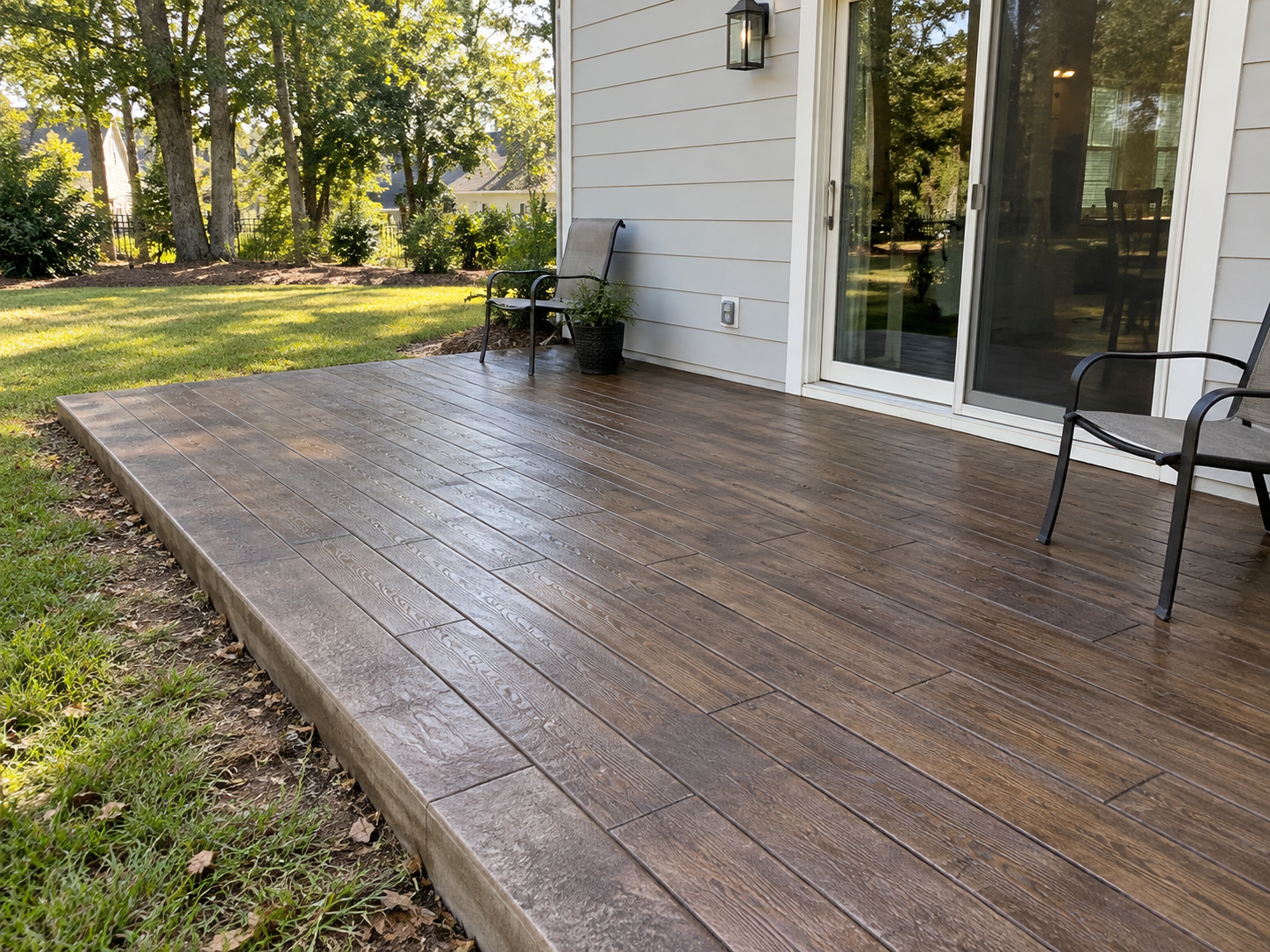
  • Oversized rectangular plank or tile stamps
  • Wood plank patterns for a deck look without deck upkeep
  • Seamless texture skins with saw-cut lines for a modern grid
  • Monochrome color with a single contrasting band


None of these are rules. They are starting points that keep a new surface from arguing with the house behind it, and our stamped concrete installation page covers how pattern and color get narrowed down during the estimate stage.

Design Choices That Account for Local Conditions


Weather and tree cover shape how a patio looks a year in, not just on the day it is finished. These are the factors we raise with clients before color is locked.

Local Condition Effect on a Patio Design Response
Pine pollen, late March to early April Yellow film across the whole surface Mid-tone earth colors; avoid near-black and very pale finishes
Heavy shade from mature canopy Surface stays damp, reads darker than the sample Go one shade lighter than the sample; add texture for grip
Humid summer heat Dark surfaces get hot underfoot Lighter tones for barefoot areas and pool surrounds
Red clay runoff at edges Staining along the perimeter Darker border band; grade soil away from the slab
Summer downpours Standing water and slow drying Pitch away from the house; plan the water's exit before layout

Pollen is the one that catches people out. Tree pollen peaks here between late March and early April, and the NC State Extension pine pollen guide explains why the yellow coating shows up when it does. A mid-tone patio hides those few weeks far better than either extreme.

Layout Ideas Beyond a Plain Rectangle


Zoned Patios

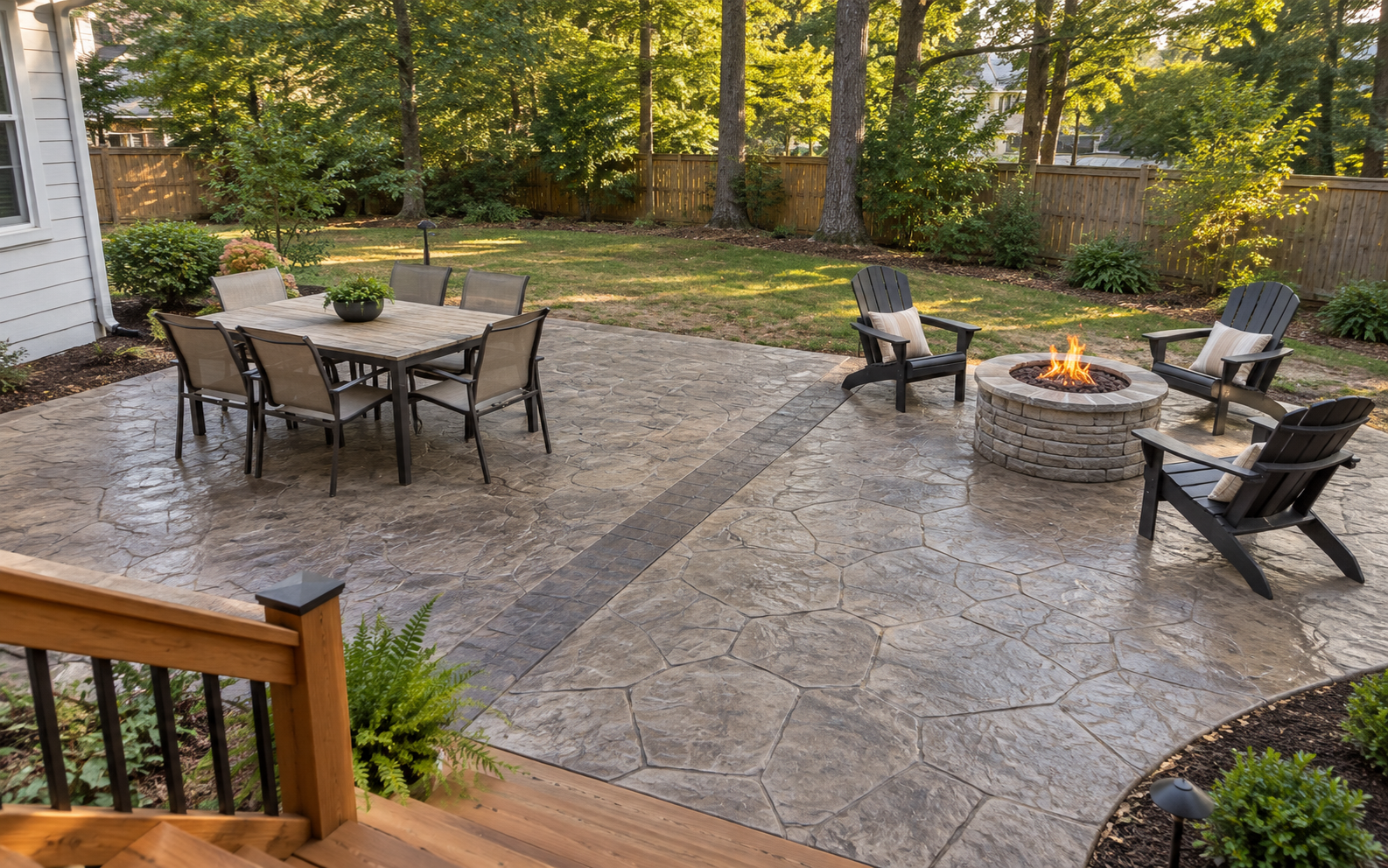
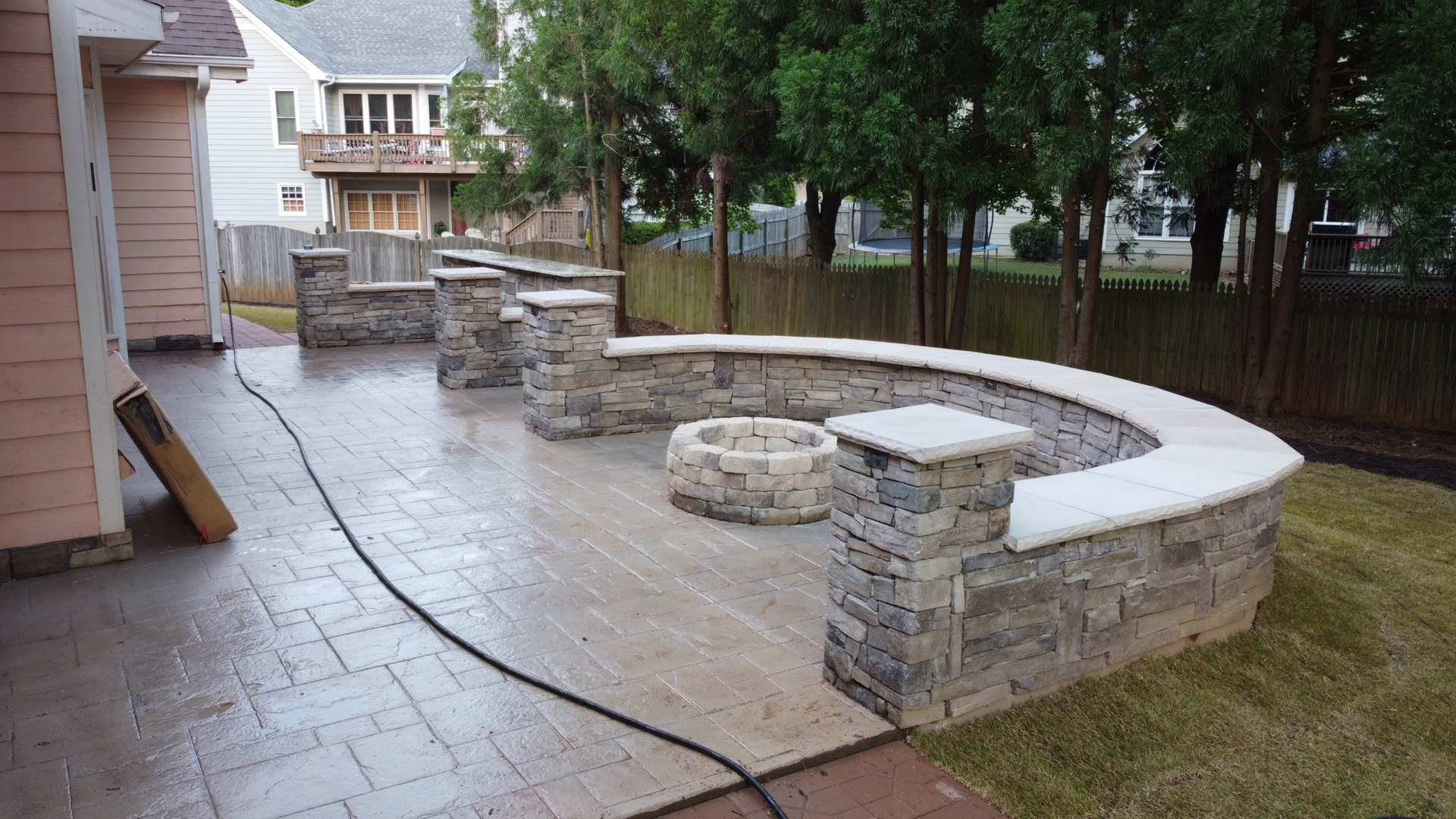
Stamped concrete patio divided into dining and fire pit zones in a Durham, NC backyard

Splitting the surface into defined areas makes a patio feel larger and gives furniture a logical home. Zones can be marked without changing elevation.


  • A dining zone sized for a table plus chair pull-out
  • A lounge or fire pit zone in a contrasting pattern
  • A grill landing in a darker, stain-forgiving color
  • Saw-cut or border lines dividing the zones visually


Borders, Bands, and Inlays

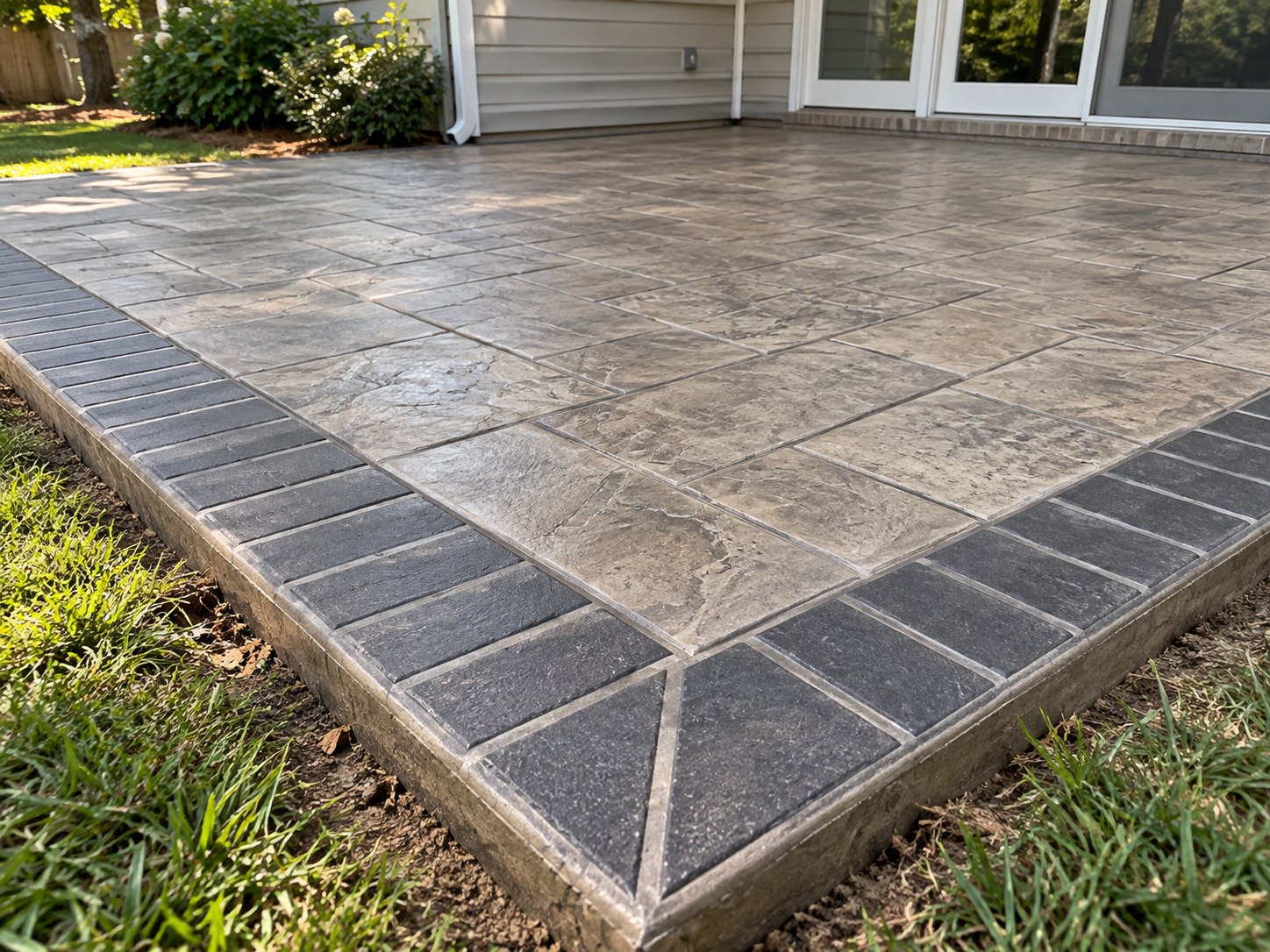
Contrasting soldier course border framing a stamped concrete patio in Durham, NC

Edge detail is where a patio starts looking designed instead of poured. It also costs less than patterning the entire surface in something complex.


  • A soldier-course border framing a simpler field
  • A compass or medallion inlay as a focal point
  • A contrasting band where the patio meets a walkway
  • Color banding that picks up the roof or trim


Curves and Grade Changes

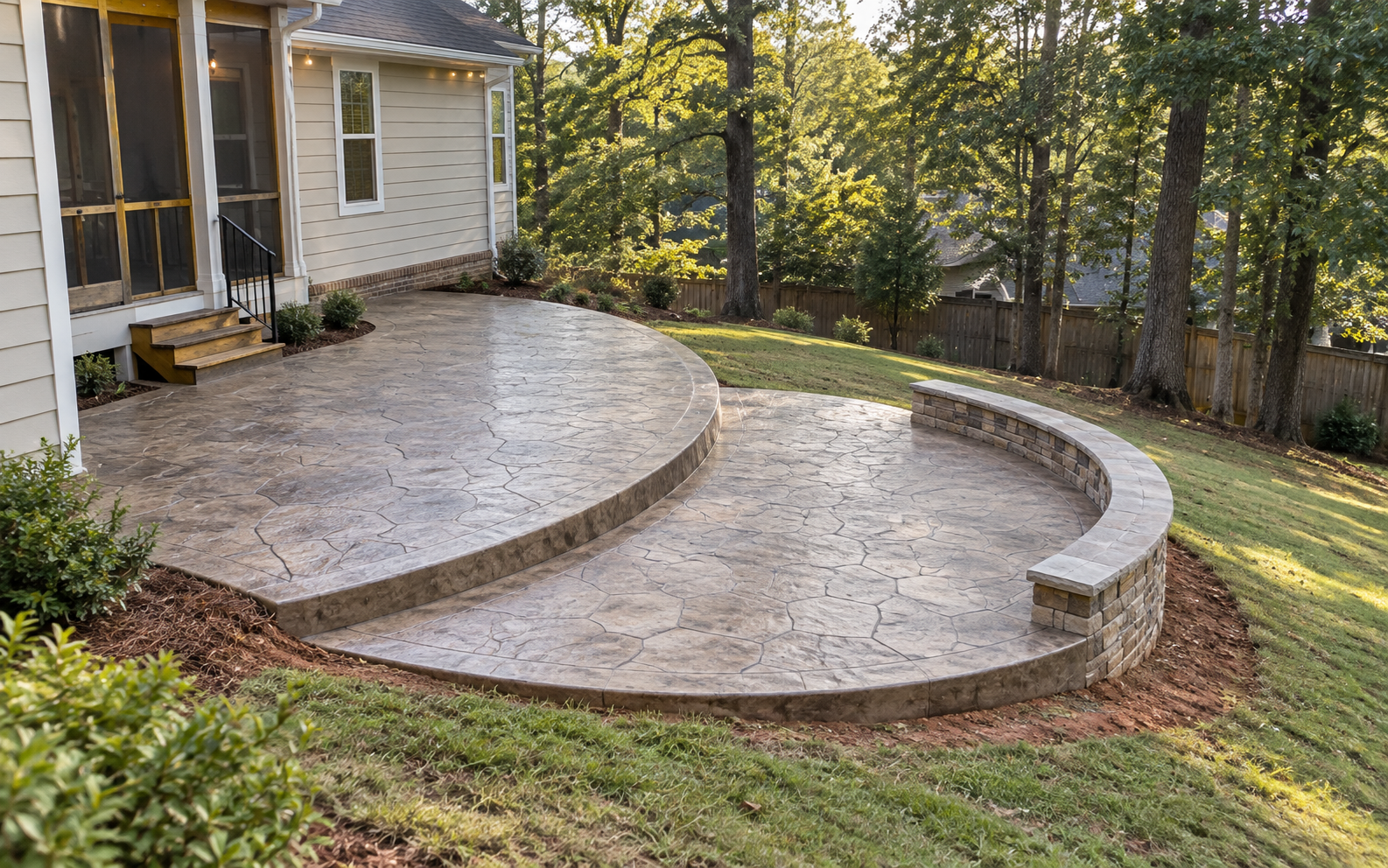
Curved stamped concrete patio stepping down a sloped Durham backyard with a seat wall

Durham's rolling terrain means a lot of backyards slope. Working with the grade usually beats flattening it.


  • Curved edges that follow existing planting beds
  • A step-down second level on a sloped lot
  • Integrated seat walls doubling as retaining
  • A gentle arc connecting the patio to a side path

Details Worth Planning Before the Pour


These are the items homeowners most often mention afterward, and all of them are easier to handle before concrete is ordered:


  • Where roof and gutter water lands once the slab is in
  • Conduit sleeves for lighting or an outdoor outlet
  • Control joint placement, so joints follow the pattern instead of cutting across it
  • Clearance for a door swing or screened porch step
  • Total hard surface on the lot, since Durham caps impervious coverage in watershed protection overlay districts
  • Furniture dimensions, measured before the patio size is set


Size and permitting both deserve a look early. Our guide to concrete permits in Durham County covers the coverage limits that can affect how large a patio can be, and our concrete patio installation page walks through the build itself.

Frequently Asked Questions

  • How big should a stamped patio be for a dining table and chairs?

    Plan on a minimum of 12 by 12 feet for a six-person table, which allows chairs to pull back without dropping a leg off the edge. A 16 by 18 foot surface comfortably handles a dining set plus a small seating group. Measure your actual furniture first, since patio sets vary more than people expect.

  • Should I use one pattern or mix two?

    One pattern across the field with a contrasting border is the safest approach and suits most homes. Mixing two full patterns works when the patio is large enough to give each one real space, generally above 400 square feet. Below that, two competing patterns tend to make the area read smaller.

  • Can a stamped patio work on a sloped backyard?

    Yes, and sloped lots often produce better results than flat ones. The usual approach is a stepped design with two levels connected by a short run of stairs or a seat wall. Every patio needs some pitch for drainage regardless, so existing grade is something to use rather than fight.

  • When should I start planning if I want the patio ready for summer?

    Begin the conversation in late winter. Decorative work books out quickly once spring arrives, and stamping has to be finished inside a narrow window while the surface is at the right firmness, so settled weather matters more than it does for a plain pour. Booking early also gives you more say over the date.

Ready to Design Yours?


Send us photos of your house and backyard and we will suggest patterns and colors that fit. ADR Construction has poured decorative concrete across the Triangle for over 20 years. Call (919) 530-9922 or request a free estimate to get started.

REQUEST A FREE ESTIMATE CALL US NOW
Finished broom finish concrete patio behind a home in Durham, NC
November 26, 2026
Concrete patio cost in Durham, NC runs $8 to $18 per square foot. Get budget ranges by patio size, what moves your quote, and where to spend or save.
Stamped concrete patio with a border beside a screened porch
November 10, 2026
Compare stamped concrete vs pavers in Durham, NC for patio upkeep, repair tradeoffs and quote scope. Learn what to ask before choosing your surface.
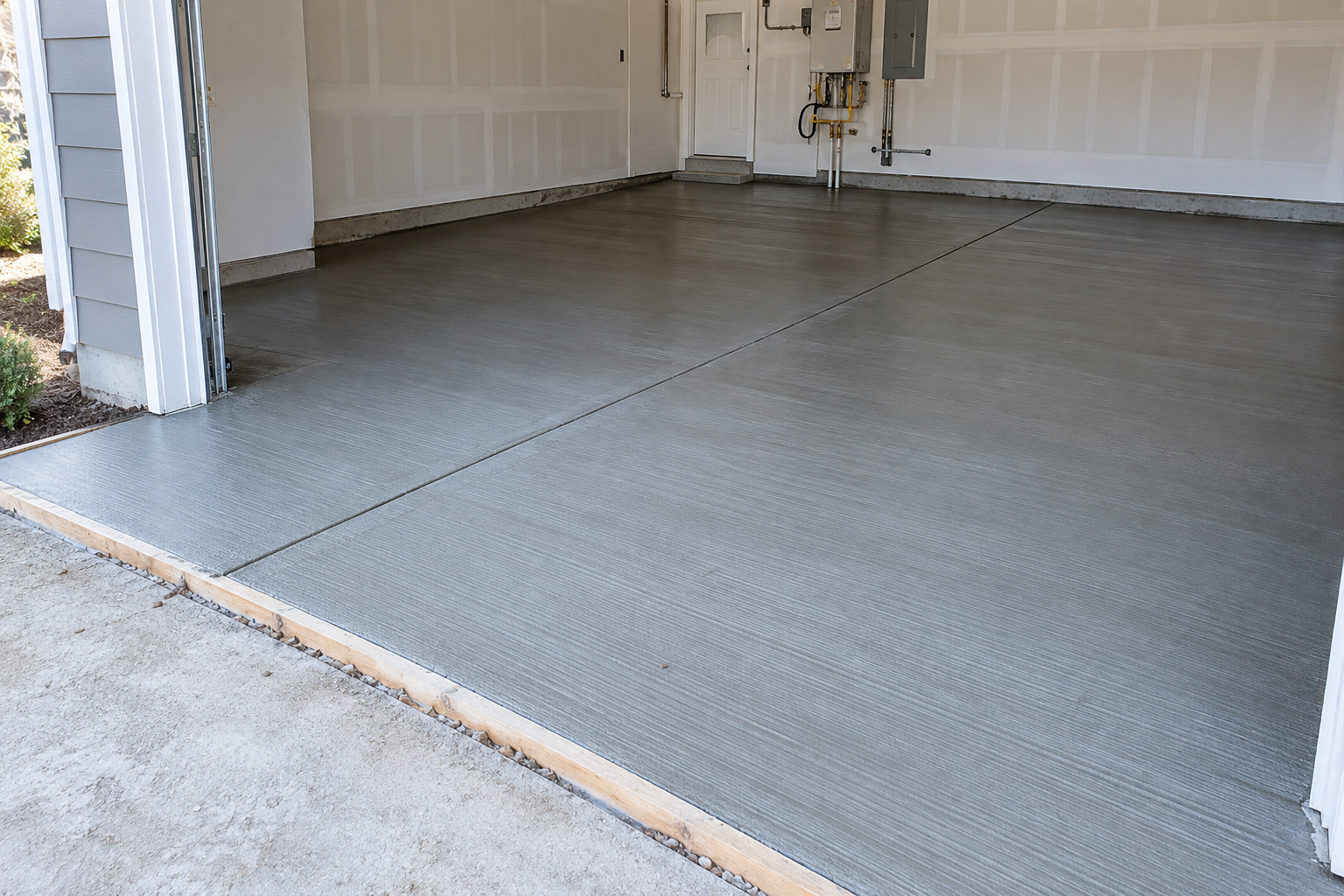
Freshly poured concrete garage floor with broom finish in a Durham, NC home
October 28, 2026
Picking a garage floor in Durham, NC? Thickness, finish, and sealer are really one decision. Here is how they connect and why coatings peel locally.
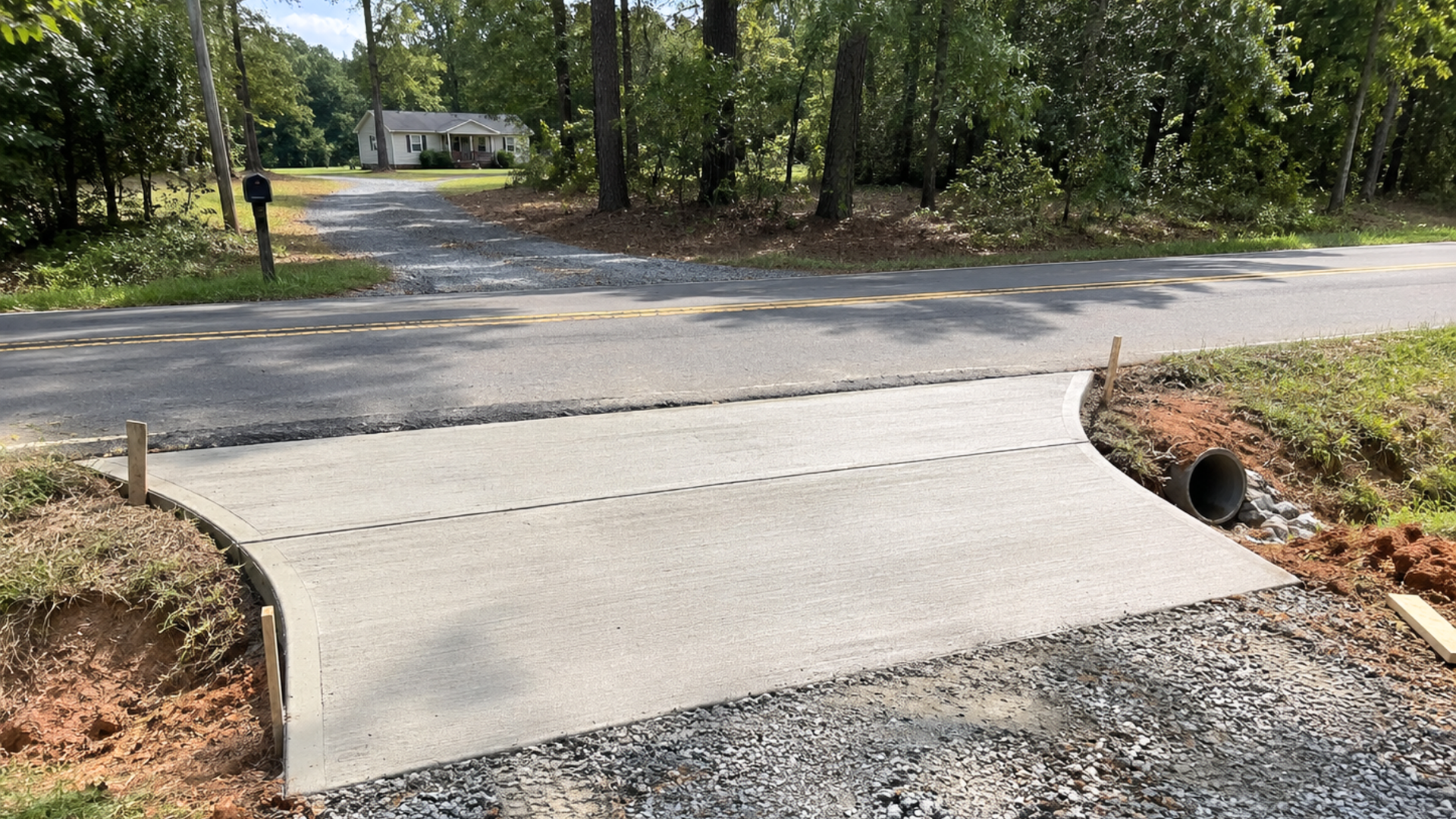
New concrete driveway apron meeting the street at a Durham County, NC home
September 23, 2026
Good news: most Durham County driveways and patios need no building permit. The catch is the street connection and your lot's limit. Here's what to check.
Newly poured two-car concrete driveway with broom finish at a Durham, NC home
September 9, 2026
Concrete driveway cost in Durham, NC runs $8 to $18 per square foot. See cost by size and finish, what drives the range, and how to budget your project.
ADR Construction crew finishing a freshly poured concrete driveway
August 18, 2026
Wondering about the best time to pour concrete in Durham, NC? Get month-by-month conditions, seasonal tradeoffs, and expert scheduling advice from ADR.