Concrete Patio Cost in Durham, NC: 2027 Budget Guide
Concrete patio cost in Durham, NC runs about $8 to $18 per square foot installed for a standard broom finish. For the sizes most homeowners actually build, that means a working budget of roughly $2,000 to $5,000.
The spread is wide because square footage is only part of the bill. Truck access, yard slope, and whether anything has to come out first move the number as much as the finish does.
Treat these as planning ranges. They help you set a budget and decide how big to build, but no range replaces a quote written against your yard.
What a Patio Costs by Size
These budgets apply the local per-foot range to common footprints. They assume a broom finish on a straightforward site, with no demolition or major grading.
| Patio size | Square feet | Budget range |
|---|---|---|
| 8 x 10 | 80 | $650 to $1,450 |
| 10 x 12 | 120 | $950 to $2,150 |
| 12 x 16 | 192 | $1,550 to $3,450 |
| 16 x 16 | 256 | $2,050 to $4,600 |
| 16 x 20 | 320 | $2,550 to $5,750 |
| 20 x 20 | 400 | $3,200 to $7,200 |
Read the smallest sizes carefully. Forming, mobilization, and ready-mix minimums cost nearly the same whether a crew pours 80 square feet or 300, so small footprints land at the top of the range or past it. Going slightly bigger often costs less per foot than people expect.
What Moves Your Quote Within the Range
Two patios of identical size can price thousands apart. These factors usually explain the gap.
Backyard Access
This is the driver most people never see coming, and it is specific to patios. A driveway pour lets the truck back up to the forms and discharge straight in. A backyard rarely does.
When a gate, fence line, or tight side yard blocks the truck, concrete has to move by wheelbarrow, buggy, or pump. That adds crew hours and sometimes equipment, and can stretch a one-day pour.
Grade and Elevation
A flat yard close to the back door is the cheapest case. Slope raises the price because it brings in fill, forming, and sometimes steps or a short retaining edge.
The area sits on rolling terrain, so plenty of local backyards need some correction. Working with the existing grade rather than flattening it usually keeps costs down.
Demolition and Drainage
Removing an old patio adds breaking, hauling, and disposal. If the old slab holds wire mesh or rebar, removal takes longer still.
Drainage is the other common addition. Water has to leave the surface and move away from the house, and fixing a yard that pools is real labor, not a line item to trim.
ADR Construction has poured patios across the Triangle for over 20 years. Request a free estimate or call (919) 530-9922.
Features That Have to Be Poured In
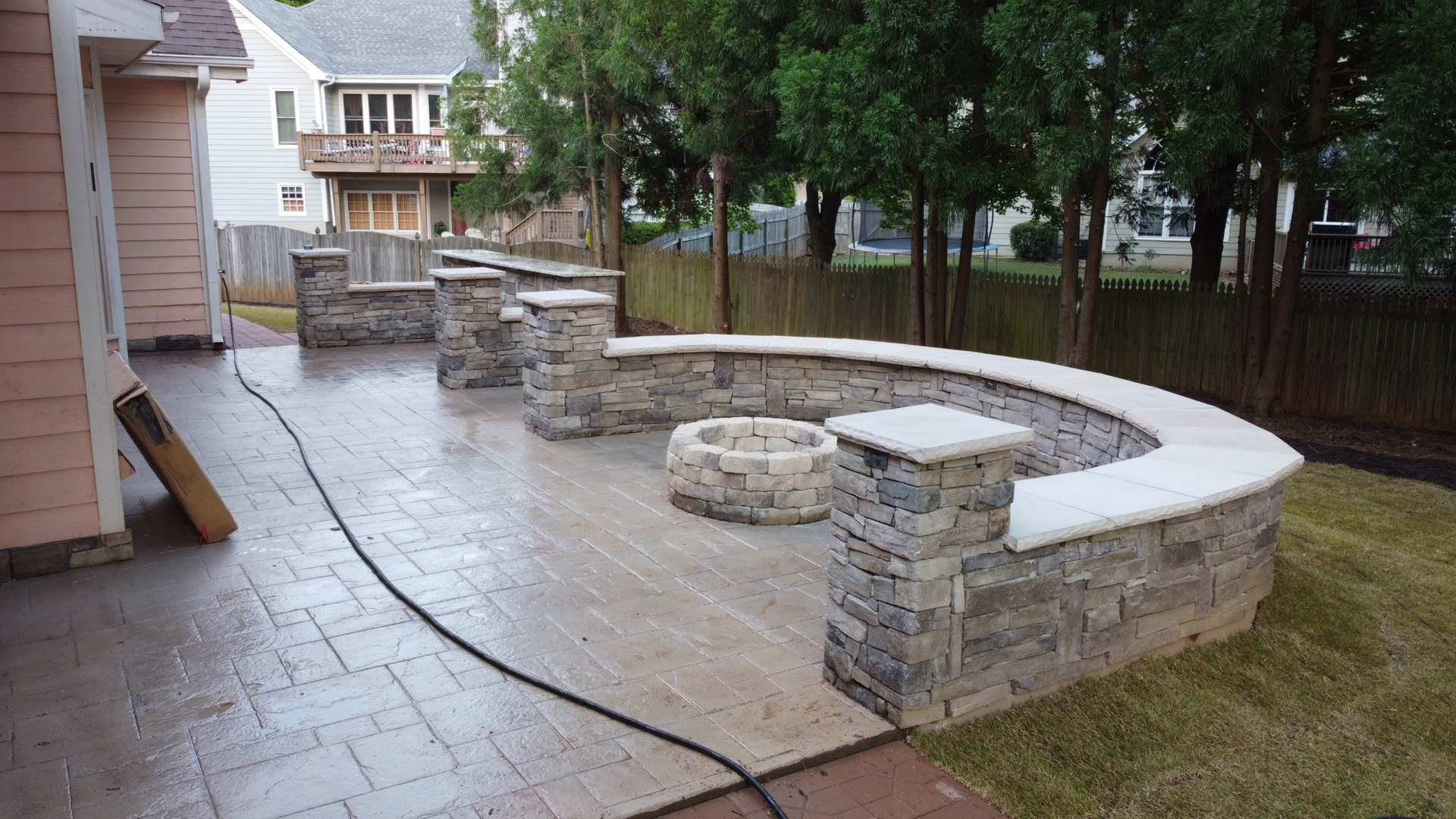
Some features cost far less as part of the original pour, because the footing, conduit, or reinforcement goes in while the forms are open. Others can wait without penalty.
Plan these into the pour:
- footings for an outdoor kitchen
- a built-in fire feature
- seat walls
- conduit for lighting or an outdoor outlet
These can safely wait:
- freestanding fire pits and planters
- furniture and grills
- pergolas on surface-mounted posts
Retrofitting a footing into a finished slab means cutting and patching. That costs more than including it on day one and rarely looks as clean, so settling your feature list before the pour is a genuine saving.
The Ongoing Cost Most Budgets Miss
A patio adds impervious surface to your lot, which can carry a recurring cost here. The City of Durham bills a residential stormwater fee in three flat tiers set by total impervious area on the parcel.
As of July 1, 2026, lots under 2,000 square feet pay Tier 1, lots from 2,000 to 3,999 pay Tier 2, and anything above pays Tier 3. Current rates sit on the city's Durham stormwater utility fee page.
If your lot already sits near a tier boundary, a new patio can push it over. The amounts are modest next to the build cost, but they recur monthly and are easy to check before you settle on a size.
Coverage limits are the related constraint. Parts of the county sit inside watershed protection overlay districts that cap how much of a lot can be covered, which can limit patio size regardless of budget. Our guide to concrete permits in Durham County covers those approvals.
Sizing the Patio to the Budget
A driveway's size is set by the lot. A patio's is set by you, which makes size the strongest budget lever you have.
Measure your furniture before setting dimensions, since patios are more often built too small than too large. Then decide where the money does the most work.
Worth spending on:
- base preparation and compaction
- drainage that moves water away from the house
- adequate slab thickness
- any footing you will want later
Worth trimming:
- overall square footage
- decorative finish across the whole surface
- features you can add in a later season
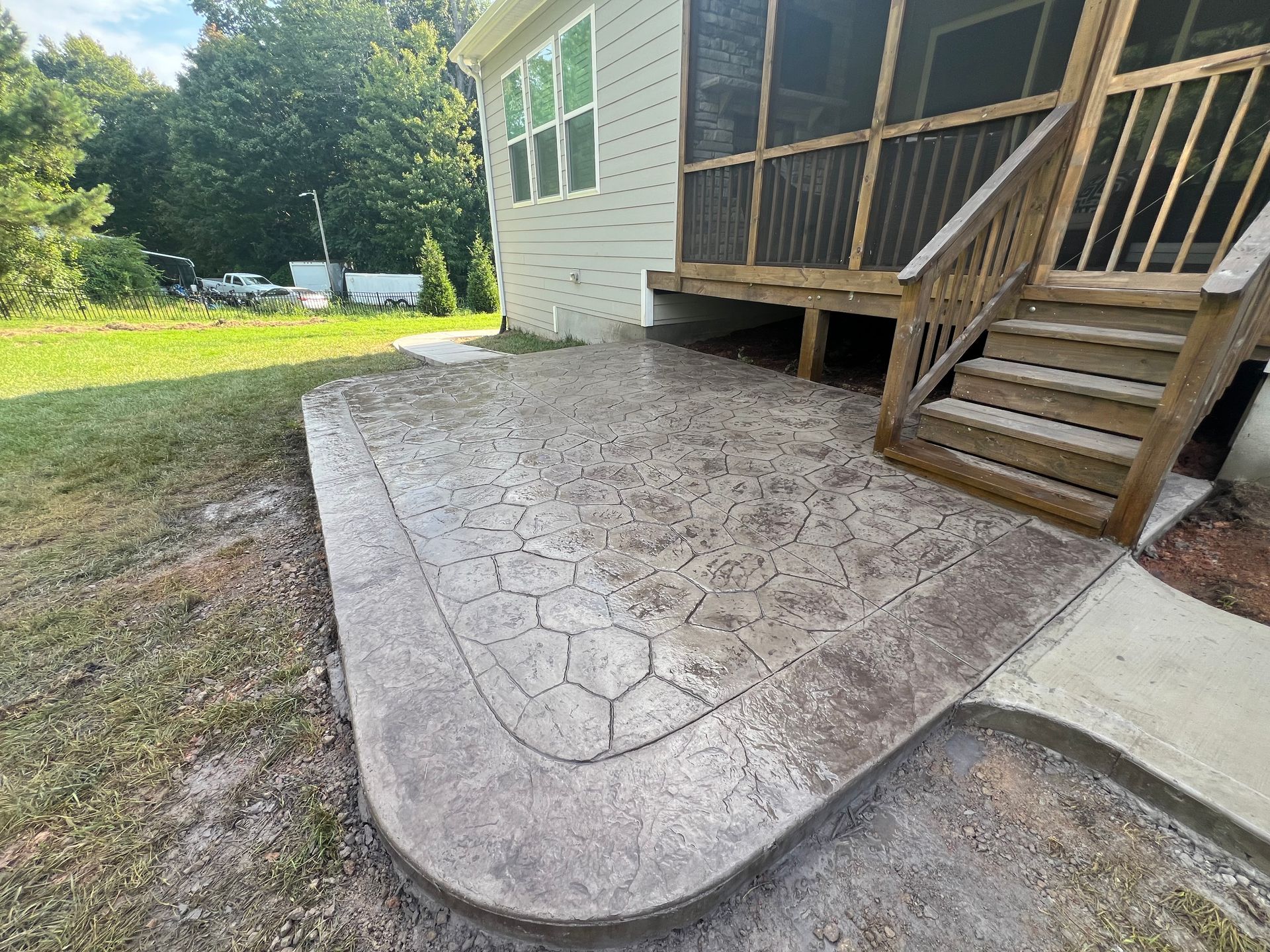
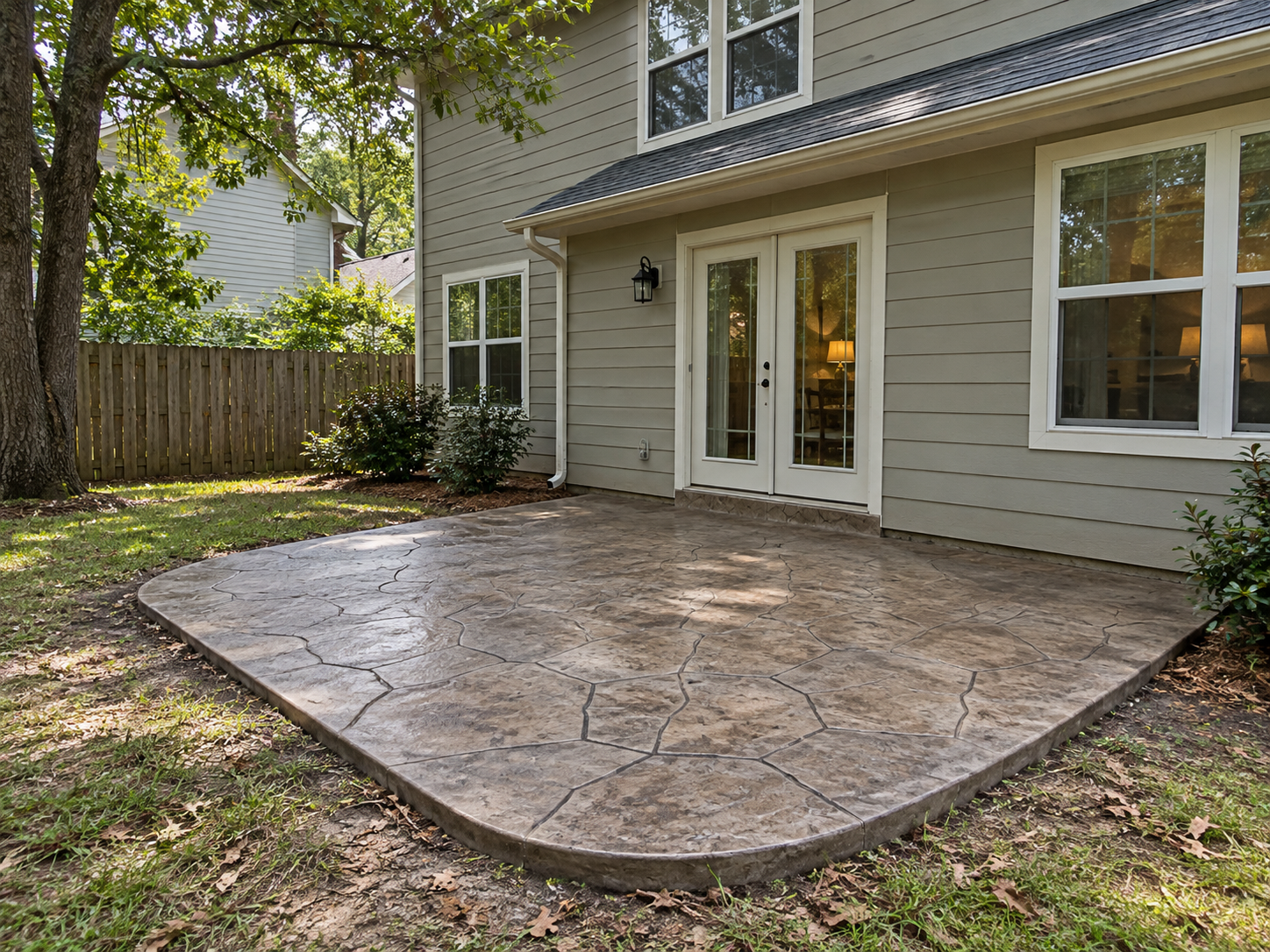
A practical middle path is a broom finish across the main field with a decorative border, which reads as a designed surface at a fraction of a fully stamped price. If you are weighing concrete against another material, our comparison of stamped concrete and pavers for Durham patios covers how the two quote out.
Frequently Asked Questions
Does a concrete patio add value when I sell?
Buyers generally treat usable outdoor space as an asset, though no single improvement carries a guaranteed return. A patio sized to suit the house shows better than an oversized slab that crowds the yard. Treat resale as a secondary benefit, not the reason to build.
Is extending an existing patio cheaper than pouring a new one?
Often, but not always. An extension saves demolition and disposal, but adds seam preparation, matching, and expansion joint work. If the existing slab has settled or cracked structurally, tying new concrete to it can carry those problems into the new section, and replacing both is usually the better long-term spend.
Should the patio go in before or after landscaping?
Before, in almost every case. Concrete work brings equipment, foot traffic, and material staging across the yard, and finished beds or new sod rarely survive it. Pouring first also lets the planting be designed around the finished edge rather than cut back to fit it.
Can I phase a patio project to spread the cost?
Yes, and phasing suits patios better than most concrete work. A common approach is pouring the full slab now, footings and conduit included, then adding the fire feature, kitchen, or lighting later. The slab is the expensive part to revisit, so putting the whole footprint in at once and deferring features usually costs less than pouring in stages.
Get a Number for Your Yard
Ranges are useful for planning and useless for deciding. Send us your rough dimensions and a photo of the yard access, and we will walk you through what your site calls for. ADR Construction has poured concrete patios across Durham and the Triangle for over 20 years. Call (919) 530-9922 to start the conversation.